


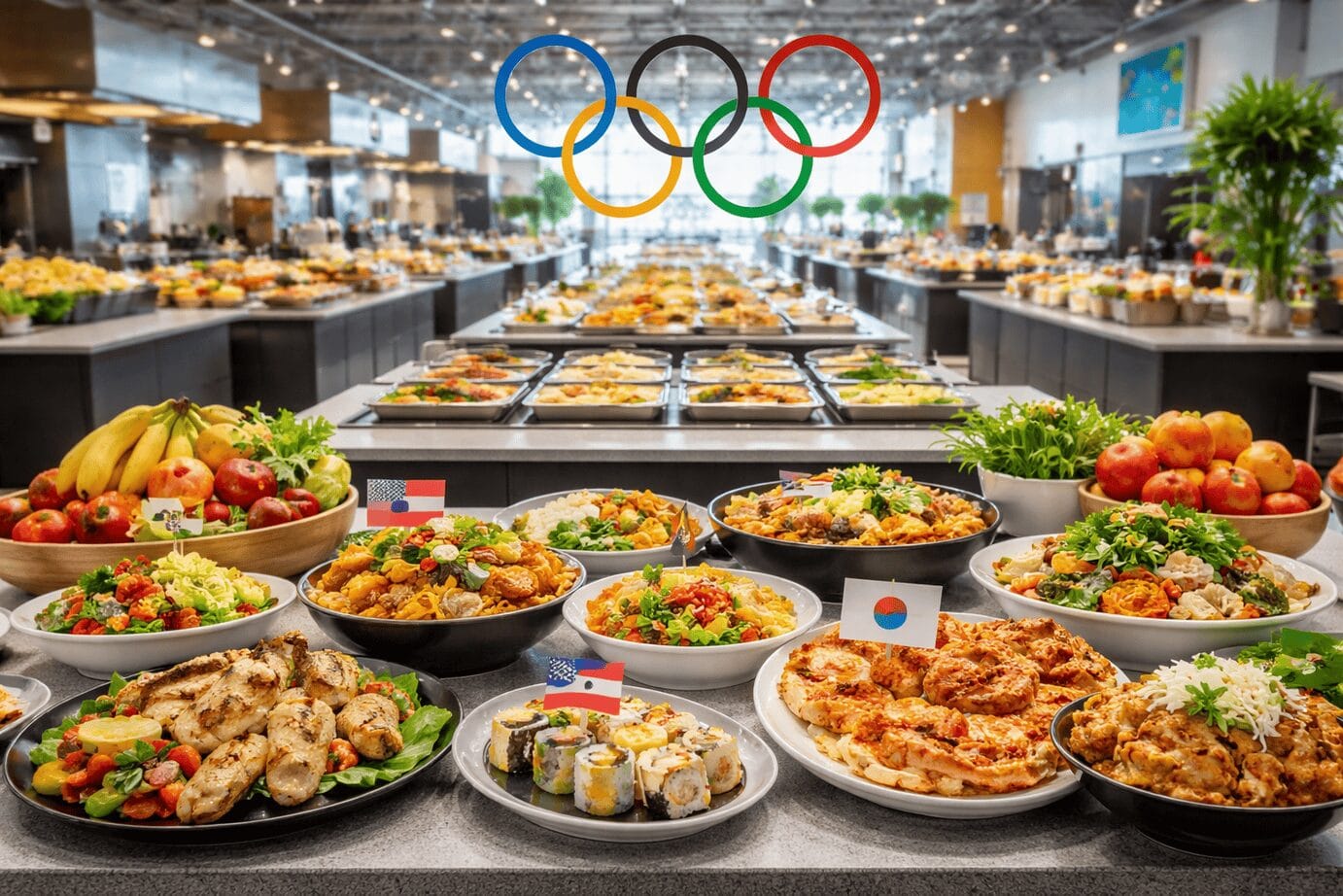
When the world’s greatest athletes gather to compete on sport’s biggest stage, their nutrition becomes just as critical as their training. The Olympic Village food experience has evolved from simple cafeteria-style meals into a massive logistical operation designed to fuel thousands of elite competitors from over 200 countries. Yet despite enormous budgets and careful planning, Olympic Village food has become one of the most talked-about aspects of the Games, with athletes taking to social media to share candid reviews that range from glowing praise to scathing criticism.
The scale of feeding an Olympic Village is staggering. During the Paris 2024 Olympics, the dining hall served approximately 40,000 meals daily to 15,000 athletes, coaches, and officials. This 24-hour operation required 200 cooks working around the clock to prepare food that accommodated diverse dietary needs, religious requirements, and cultural preferences. From halal options to gluten-free sections, vegan menus to athlete-specific macronutrient ratios, the Olympic Village food service must balance performance nutrition with cultural authenticity.
A Global Culinary Challenge
Creating an Olympic Village food program presents unique challenges that go far beyond typical institutional catering. Athletes arrive from every corner of the globe, each bringing distinct culinary traditions and nutritional expectations. A swimmer from Norway has different taste preferences than a gymnast from the Philippines or a rugby player from Australia. The dining halls must offer familiar comfort foods while introducing athletes to local cuisine from the host nation.
At the Tokyo 2020 Olympics, two dining halls offered over 700 menu items for 18,000 competitors around the clock. The food selection included deep-fried camembert, spring rolls, ramen, and gyoza, with American rugby player Ilona Maher declaring the gyoza dumplings among the best she had ever tasted. The Japanese organizers ensured that ingredients came from all 47 regions of Japan, including areas affected by the 2011 earthquake and tsunami, supporting the Games’ theme of recovery and resilience.
The Paris 2024 Olympics took a different approach, organizing their Olympic Village food into four main themes divided across six dining areas. Two sections featured international cuisine, two showcased French specialties, one highlighted Asian dishes, and one offered African and Caribbean options. Over 500 recipes were developed by chefs, including over 50 hot dishes ready to be served every day, with Michelin-starred chefs like Amandine Chaignot, Akrame Benallal, and Alexandre Mazzia contributing their expertise.
The Viral Sensations and Social Media Reviews
Social media has transformed how we experience Olympic Village food, with athletes sharing real-time reviews that give fans unprecedented access to behind-the-scenes life. The Paris 2024 Olympics witnessed the rise of Norwegian swimmer Henrik Christiansen, who earned the nickname “Muffin Man” after posting eight videos professing his love for the dining hall’s chocolate muffins. He gave the muffins a score of 11/10 and called them the “single greatest thing about the Olympic Village”, with one video showing him eating a muffin in bed and another featuring him apologizing to the pastry for their “really passionate” relationship.
The chocolate muffin phenomenon demonstrates how a single food item can capture global attention and become synonymous with an entire Olympic Games. Athletes from various countries joined the trend, either celebrating or seeking out these famous muffins, which became a symbol of the lighter, more human side of Olympic competition.
Not all Olympic Village food reviews have been positive. South African cross-country skier Matt C. Smith provided detailed ratings during the Milan 2026 Winter Olympics, giving the pizza an 8.5 out of 10 while describing the lasagna as merely “good.” Filipino gymnast Aleah Finnegan offered a diplomatic assessment, noting that while Olympic Village food was adequate, it lacked the seasoning she preferred in her cultural cuisine. American gymnast Hezly Rivera was more blunt in her criticism, stating simply that the dining hall food was not very good, though it served its functional purpose.
Nutrition Science Meets Athletic Performance
The nutritional requirements of Olympic athletes are extraordinary. While average adults consume 1,600 to 3,000 calories daily, competitive athletes may need anywhere from 2,000 to 8,000 calories depending on their sport, training intensity, and body composition goals. The Olympic Village food service must provide this massive caloric range while ensuring proper macronutrient ratios for optimal performance and recovery.
Athletes require approximately 50 to 70 percent of their caloric intake from carbohydrates, which serve as the primary fuel source for brain and muscle function. Protein becomes essential for muscle repair, recovery, and growth, while healthy fats protect organs and aid in vitamin absorption. The dining halls feature extensive salad bars, grills with various protein options, carbohydrate stations, and recovery foods designed to meet these specialized nutritional needs.
Each meal option at modern Olympic Villages includes detailed nutritional information, displaying calories, protein, fat, carbohydrates, sodium, and salt content per serving. This transparency allows athletes and their nutritionists to make informed choices about Olympic Village food that aligns with their specific performance goals. Some athletes use apps like Teamworks Nutrition to track their intake and consult with Olympic dietitians about meal planning.
The timing of meals becomes just as important as their content. Athletes often eat five to six smaller meals throughout the day rather than three large ones, maintaining stable blood sugar levels and preventing the energy crashes that can occur several hours after eating. The 24-hour operation of Olympic Village food halls accommodates athletes competing at different times, training at odd hours, or managing jet lag from long international flights.
Sustainability Versus Performance
The Paris 2024 Olympics made sustainability a central focus of their Olympic Village food strategy, aiming to cut the carbon footprint in half compared to previous Games. This ambitious goal led organizers to source 80 percent of ingredients locally, with 25 percent coming from within a 250-kilometer radius of the Village. They initially planned to make 60 percent of meals plant-based, though this percentage was adjusted after athletes complained about insufficient protein options.
British Olympic Association chief Andy Anson told the Times of London on July 25 that there were insufficient quantities of certain foods like eggs and chicken, and concerns about food quality including raw meat being served to athletes. Team Great Britain ultimately hired private chefs at their performance base in the Paris suburb of Clichy to supplement the Olympic Village food options.
Paris 2024 CEO Etienne Thobois announced adjustments in a press conference, stating there had been a reinforcement with 700 kilos of eggs and a ton of meat made available to meet athlete demands. The tension between environmental goals and athletic performance needs highlighted the complex challenge of designing Olympic Village food programs that satisfy multiple stakeholders.
The sustainability initiatives at Paris 2024 extended beyond menu planning. The organizers partnered with food banks and charitable organizations to redistribute unused food to people in need, addressing food waste while supporting local communities. Notable that they avoided installing deep fryers in the dining hall, meaning French fries were absent despite being a comfort food many athletes expected. The kitchens used existing infrastructure, converting a 121-year-old film studio complex into the massive restaurant space.
Historical Evolution of Olympic Dining
Olympic Village food has transformed dramatically since the first athlete villages. At the 1924 Paris Olympics, competitors received three simple meals daily, with dinner including soup, a main meat course, and dessert, accompanied by wine or beer at lunch and dinner. The 1948 London Olympics faced post-war food shortages so severe that each country was asked to bring food for its own athletes.
Modern Olympic dining represents a quantum leap in scale and sophistication. The 2012 London Olympics featured separate stations for American, French, Asian, Mediterranean, and halal meals. The American offerings included roast chicken, burgers, pasta salads, macaroni and cheese, corn on the cob, potato salad, steak, and a massive salad bar with fresh and pickled vegetables, nuts, dried fruits, and dressings. The French section showcased an impressive cheese selection, while British options included roast Welsh lamb shoulder and sea trout with almonds.
The 2014 Sochi Olympics introduced regional Russian specialties like blini, borscht, pelmeni dumplings, and shashlyk meat skewers. American bobsledder Lolo Jones made headlines by posting a video comparing her meal to dog food, though she quickly deleted the controversial clip. The incident highlighted how Olympic Village food quality can significantly impact athlete morale and became a cautionary tale for future organizing committees.
The 2016 Rio Olympics served 60,000 meals daily, featuring dedicated food courts with international options. Australian taekwondo competitor Hayder Shkara posted Instagram videos showcasing the cafeteria’s vast selection, while other athletes noted improvements over previous Games. However, Rio also faced challenges with long lines and concerns about food hygiene standards, leading some teams to bring their own provisions.
Cultural Representation and Inclusion
One of the most fascinating aspects of Olympic Village food is how it serves as a cultural ambassador program. Athletes sample cuisines they might never encounter in their home countries, fostering cross-cultural understanding through shared meals. A bobsledder from Jamaica might discover Korean bibimbap, while a figure skater from Canada could develop a newfound appreciation for Ethiopian injera.
The Tokyo Olympics particularly excelled at showcasing Japanese culinary traditions. Representatives from across over forty prefectures sourced local ingredients to create tens of thousands of bento boxes served to hungry Olympians. The dining halls offered various ramen styles with soy sauce and miso broths, grilled Wagyu beef, tempura, okonomiyaki pancakes, and sushi prepared with meticulous attention to traditional techniques. Sports drinks like Aquarius and Pocari Sweat, popular in Japan for their hydrating properties and mild flavors, were readily available.
Religious and ethical dietary requirements receive careful consideration in Olympic Village food planning. Halal sections ensure Muslim athletes can find appropriate protein sources prepared according to Islamic law. Kosher options accommodate Jewish dietary laws. Vegetarian and vegan stations have expanded significantly in recent Games, reflecting both sustainability goals and growing plant-based preferences among athletes.
The Tokyo 2020 Olympics made history by introducing the first dedicated gluten-free section, recognizing that celiac disease and gluten sensitivity affect athletes across all nations. Lactose-free and nut-free options address common allergens that could compromise performance or cause serious health reactions. This attention to dietary restrictions ensures every athlete can fuel properly regardless of their medical needs or personal choices.
The Reality Behind the Reviews
Mixed reviews of Olympic Village food reveal the inherent difficulty of satisfying thousands of elite athletes with diverse expectations. Simone Biles offered a diplomatic perspective when asked about the Paris dining hall, explaining that Olympic Village food prioritizes health and performance over authentic French culinary experiences. She noted that pain au chocolat pastries and pizza received her approval, even if other options fell short of expectations.
Some athletes choose to avoid Olympic Village food entirely, preferring familiar options to prevent digestive issues before crucial competitions. Members of Team Great Britain, along with American swimmers, decided to skip the food hall, with some opting to make their own meals like egg, ham, and cheese sandwiches using bakery rolls. The psychological comfort of eating known foods can be as important as the nutritional content when dealing with pre-competition nerves.
Positive reviews often highlight specific stations or dishes that exceed expectations. Fencing champion Lee Kiefer reviewed Asian food in the Olympic Village, giving chicken tikka and curry beef both five stars, while rating leeks and cauliflower at three stars and sticky rice at just two stars. These detailed assessments help future organizing committees understand what works and what needs improvement.
The Milan 2026 Winter Olympics has seen athletes particularly appreciating Italian specialties. The scale of the operation includes preparing about 3,000 eggs and approximately 450 kilograms of pasta each day, with the main dining hall serving about 3,400 meals per day across six food stations. Canadian hockey player Natalie Spooner, known to her teammates as “Chocolate Monster,” struggled to find adequate chocolate desserts, locating only a standard pudding cup that could have been creamier.
Logistical Complexities and Problem-Solving
The operational challenges of Olympic Village food service require months of advance planning and coordination. Caterers must work with National Olympic Committees to understand dietary preferences, source ingredients that meet both quality and sustainability standards, and train staff to handle multiple languages and cultural sensitivities. The 24-hour operation demands shift rotations that maintain consistent food quality whether an athlete arrives at 3 AM or 3 PM.
Food safety becomes paramount when serving thousands of people in a short timeframe. Proper handling, storage, and preparation protocols prevent foodborne illnesses that could devastate an athlete’s Olympic dreams. Sanitation stations, gloved food service, sanitized trays and cutlery, and strict temperature controls create multiple layers of protection. During the COVID-19 pandemic, Tokyo 2020 added plexiglass screens, mandatory glove-wearing while selecting food, and encouragement to keep mealtimes brief.
Supply chain management for Olympic Village food requires anticipating consumption patterns that can shift dramatically. Early in Paris 2024, organizers underestimated demand for eggs and certain meats, leading to rationing and complaints. The quick response to increase protein supplies demonstrated the importance of flexibility and real-time monitoring. Balancing supply with sustainability goals creates constant tension, as airlifting ingredients contradicts environmental objectives.
Language barriers add another layer of complexity. Multilingual signage, visual representations of dishes, and staff trained in multiple languages help athletes navigate the dining halls and communicate dietary needs. Nutritional information must be translated accurately, and allergen warnings require crystal-clear communication to prevent potentially life-threatening mistakes.
The Future of Olympic Dining
As Olympic Villages continue evolving, organizers face pressure to balance competing priorities: sustainability, cultural authenticity, athletic performance, cost management, and athlete satisfaction. Technology offers potential solutions, with apps allowing meal pre-ordering to reduce waste and wait times. Personalized nutrition tracking helps athletes optimize their choices, while data analytics can predict consumption patterns more accurately.
Future Olympic Village food programs might incorporate more individualized meal planning, with athletes submitting preferences and restrictions before arrival. 3D food printing technology could enable customized portions and combinations while reducing waste. Vertical farming and hydroponics in or near the Village could provide ultra-fresh produce with minimal environmental impact.
The social media age has permanently changed Olympic Village food, creating both challenges and opportunities. While negative reviews can go viral and damage reputations, positive reactions generate excitement and showcase host nation cuisine to global audiences. Organizing committees now recognize that dining experiences contribute significantly to overall athlete satisfaction and the Games’ public perception.
Climate change will likely intensify the focus on sustainable Olympic Village food practices. Future hosts may pioneer plant-based protein alternatives that satisfy athletes’ nutritional needs while dramatically reducing carbon footprints. Partnerships with local farmers, seasonal menus, and zero-waste initiatives could become standard rather than experimental.
Lessons for Elite Performance Nutrition
The Olympic Village food experience offers valuable insights for anyone interested in performance nutrition. The emphasis on frequent small meals maintains stable energy levels throughout the day. Pairing iron-rich foods with vitamin C sources improves absorption. Timing carbohydrate intake around training sessions optimizes fuel availability and recovery. Staying hydrated with water and electrolyte beverages prevents the performance decreases associated with dehydration.
Athletes demonstrate that there is no one-size-fits-all approach to optimal nutrition. Experimentation, tracking, and adjustment based on individual responses create personalized strategies that maximize performance. Some athletes thrive on specific pre-competition rituals, while others prioritize variety and cultural comfort foods that provide psychological benefits alongside nutritional value.
The importance of food quality extends beyond macronutrient ratios. Fresh ingredients, proper preparation techniques, and appealing presentation contribute to satiety and enjoyment. When food tastes good and looks appetizing, athletes are more likely to consume adequate calories and nutrients rather than skipping meals or under-fueling.
Beyond the Dining Hall
While Olympic Village food dominates discussions, many athletes seek culinary experiences beyond the official dining facilities. In non-pandemic years, exploring host city restaurants, street food, and local specialties becomes part of the Olympic adventure. Team bonding often occurs over shared meals at neighborhood establishments that offer authentic regional cuisine.
The contrast between Olympic Village food and outside dining highlights the challenges of institutional catering. Even with Michelin-starred chefs consulting on menus, preparing food for thousands differs fundamentally from restaurant service for dozens. The personal touch, made-to-order preparation, and specialized techniques that define fine dining become impractical at Olympic scale.
Some National Olympic Committees bring their own chefs to supplement or replace Olympic Village food, particularly for athletes with highly specific nutritional protocols. These private chefs prepare familiar meals using imported ingredients, eliminating variables during the crucial competition period. Australian teams have famously brought baristas to ensure proper flat whites are available, demonstrating how even beverage quality matters to athletic performance and morale.
The Human Element
Ultimately, Olympic Village food represents more than nutrition and logistics. The dining hall serves as a social hub where competitors from rival nations share tables, exchange stories, and build friendships that transcend sporting competition. A gymnast from the United States might bond with a wrestler from Iran over mutual appreciation for a particular dessert, creating human connections that embody the Olympic spirit.
The moments athletes remember often involve food experiences. The Norwegian swimmer who fell in love with chocolate muffins created a lighthearted narrative that millions enjoyed during intense competition. The Filipino gymnast who diplomatically noted her seasoning preferences sparked conversations about cultural food differences. These human stories make Olympic Village food memorable beyond its functional role.
Athletes competing at the highest level face enormous pressure, and comfort food provides emotional support during challenging times. Whether it’s pizza that reminds a swimmer of home, gyoza dumplings that become a daily ritual, or chocolate muffins that offer a moment of pure joy, Olympic Village food nourishes both body and spirit.
The evolution of Olympic dining reflects broader changes in our understanding of nutrition, sustainability, and cultural respect. Future Games will undoubtedly face new challenges and opportunities as our world continues changing. But the fundamental goal remains constant: providing fuel that enables the world’s greatest athletes to perform their best while honoring the diverse traditions and preferences that make the Olympic movement truly global.
Sources
https://www.today.com/food/trends/milan-olympic-village-food-reviews-rcna257442
https://www.nbc.com/nbc-insider/what-do-olympians-eat-in-olympic-village-2024-paris
https://www.today.com/food/trends/paris-2024-olympic-village-food-reviews-rcna164168
https://www.olympics.com/en/news/paris-2024-inside-the-athlete-restaurant
https://www.eatthis.com/news-olympians-reveal-what-food-is-like-at-games
https://www.today.com/food/tokyo-olympics-dining-halls-food-athletes-share-inside-look-t226599
https://www.topendsports.com/nutrition/events/olympic-village-nutrition.htm
https://travelnoire.com/food-in-the-olympic-village
https://edition.cnn.com/2026/02/12/health/how-to-eat-like-olympic-athletes-wellness
https://www.conchovalleyhomepage.com/news/athletes-report-food-issues-in-olympic-village
https://healthcare.utah.edu/healthfeed/2024/07/eat-olympian-fuel-your-performance-right-nutrition
https://www.tatlerasia.com/dining/food/my-what-do-athletes-eat-while-at-the-olympic-games
More from The Daily Mesh:
- How Misinformation is Manipulating Public Opinion in 2025
- Thrilling Moments at the Ongoing US Open Tennis Tournament 2025
- Historic Record Attendance at London Trans+ Pride March Marks Turning Point for LGBTQ+ Visibility