


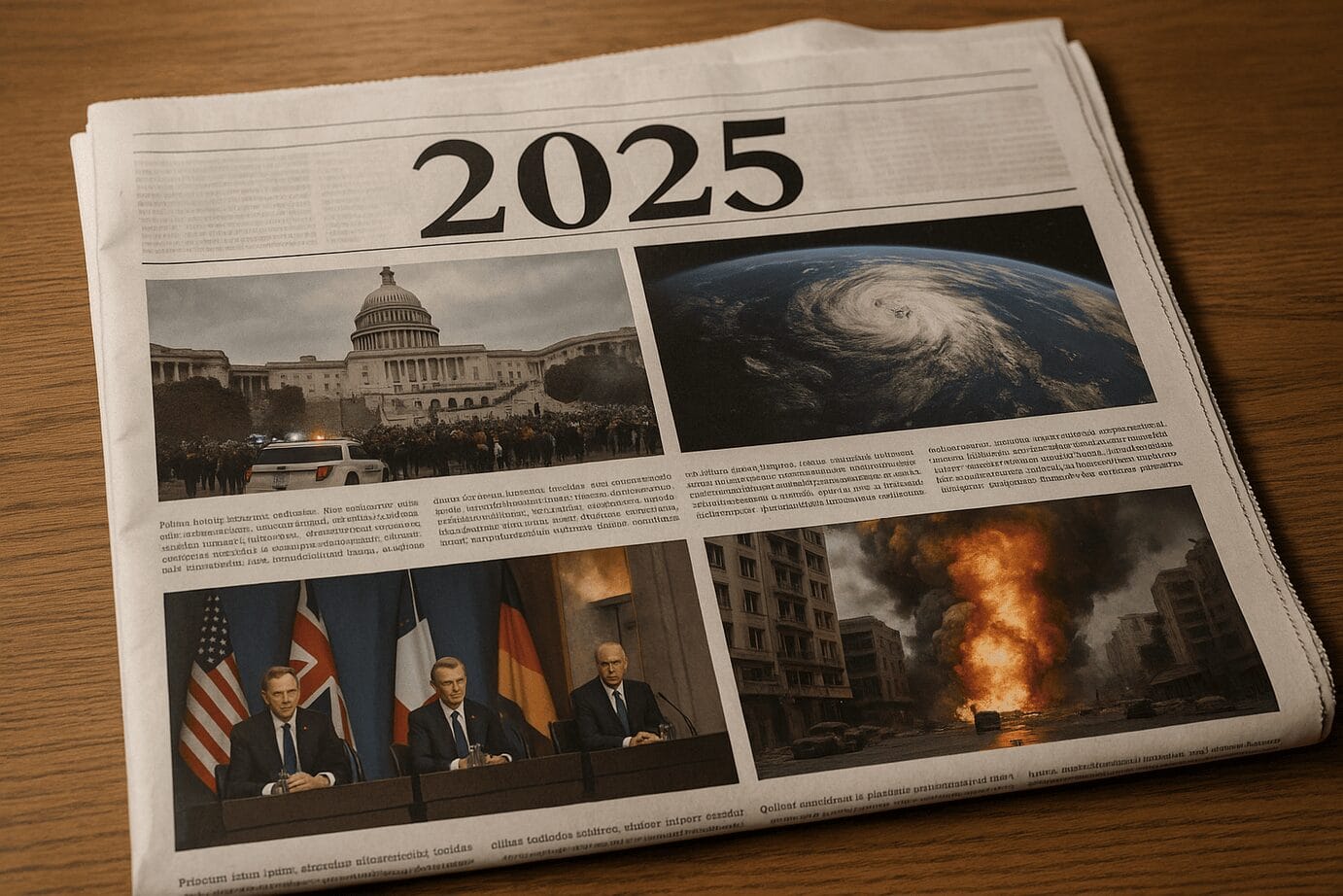
As we close the chapter on another extraordinary year, 2025 has proven to be a period of remarkable transformation, devastating natural disasters, groundbreaking technological advances, and momentous political shifts. From artificial intelligence reaching unprecedented capabilities to climate catastrophes causing billions in damages, the significant events 2025 delivered have fundamentally reshaped our world in ways we’re only beginning to understand. This comprehensive review examines the major milestones that defined 2025 and set the stage for the future ahead.
Artificial Intelligence Dominates the Technology Landscape
The evolution of artificial intelligence emerged as one of the most significant events 2025 witnessed, with breakthroughs that pushed the boundaries of what machines can accomplish. The year saw major tech companies racing to refine cutting-edge AI applications, particularly in areas of reasoning, frontier models, and agentic AI systems that can operate autonomously to complete complex tasks.
OpenAI made headlines in October when it launched “Atlas,” an AI-powered web browser that intensified competition with tech giants like Google. The browser integrated a state-of-the-art AI assistant capable of summarizing complex information, conducting multi-step research, and automating online tasks directly within the browsing experience. This development represented a significant step in OpenAI’s ambition to redefine how users interact with the internet.
Google announced several major AI updates throughout the year, including the introduction of SIMA 2, which marked a significant step toward Artificial General Intelligence. By integrating advanced capabilities of Gemini into SIMA 2, the model evolved from merely following instructions into an interactive companion that could converse with users and improve itself over time. The company also released WeatherNext 2, its most advanced weather forecasting model capable of generating forecasts eight times faster with resolution up to one hour.
The year also witnessed remarkable progress in AI hardware and infrastructure. OpenAI and Nvidia forged a partnership valued at approximately $100 billion to build massive AI infrastructure powered by unprecedented numbers of graphics processing units. This investment signaled the industry’s commitment to expanding AI capabilities at an exponential rate.
According to Gartner’s 2025 Hype Cycle for Artificial Intelligence, AI agents and AI-ready data emerged as the two fastest advancing technologies, experiencing heightened interest accompanied by ambitious projections. Organizations shifted their focus from experimentation to operational scalability and real-time intelligence, implementing layered AI Trust, Risk and Security Management technology to continuously support and enforce policies across all AI entities in use.
Britain’s Channel 4 made broadcasting history by launching “Arti,” an AI-generated news presenter created using generative video and voice synthesis technologies. While the broadcaster described the move as an innovative experiment for digital audiences, it immediately sparked debate about the role of automation in journalism and its potential implications for human presenters and broadcast news credibility.
Climate Disasters Shatter Records and Lives
Among the most devastating significant events 2025 brought were climate-related disasters that caused unprecedented destruction and economic losses. Natural disasters generated more than $131 billion in global losses during just the first half of the year, with the United States alone experiencing 14 extreme weather events that each resulted in billions of dollars in damages, totaling $101.4 billion collectively.
The Los Angeles wildfires stood out as particularly catastrophic. The Palisades Fire and Eaton Fire that erupted in January caused at least 30 deaths and destroyed or damaged at least 17,000 structures. According to insurance firm Gallagher Re, the economic damages reached $37 billion for the Palisades Fire and $28 billion for the Eaton Fire. The combined $65 billion cost made this event the eighth-costliest weather disaster in world history.
Unlike previous wildfires that typically affected rural areas, these blazes hit expensive, densely populated urban areas in Los Angeles, contributing to the record-breaking costs. The fires represented a stark reminder of how climate change intersects with urban development patterns to create catastrophic outcomes.
The United States endured 12 billion-dollar severe weather disasters from January to June 2025, primarily involving tornadoes, hail, wind, and flash flooding from severe thunderstorms. Two tornado events in March and May each caused at least $8 billion in insured losses. Weather disasters like wildfires and storms accounted for 88 percent of overall losses and 98 percent of insured losses, according to Munich Re.
Europe faced its own climate tragedy when an early-summer heat wave from June 23 to July 2 claimed an estimated 2,305 deaths in 12 European cities. Researchers at the UK’s Grantham Institute found that approximately 65 percent of these deaths resulted from human-caused climate change increasing temperatures by one to four degrees Celsius, essentially tripling the death toll from what it would have been without anthropogenic warming.
The 2025 Atlantic hurricane season proved particularly intense, with four out of five hurricanes reaching Category 4 or 5 strength, the highest percentage ever observed in any hurricane season. Hurricane Melissa emerged as an exceptionally violent storm that made devastating landfalls in Jamaica and Cuba at Category 5 strength, with one-minute sustained winds of 185 mph at landfall, tying it as the second-highest wind speed at landfall for any Atlantic hurricane in recorded history.
A magnitude 7.7 earthquake in Myanmar on March 7 killed an estimated 4,500 people and caused $12 billion in losses, with very little of the damage covered by insurance. The disaster highlighted the vulnerability of developing nations to natural catastrophes and the critical insurance gap that leaves populations financially devastated.
Donald Trump Returns to the White House
One of the most consequential political significant events 2025 delivered was the inauguration of Donald Trump for his second term as President of the United States. On January 20, Trump was sworn in as the 47th president, becoming only the second former president in American history to return to office after leaving, following Grover Cleveland who accomplished this feat in the 1890s.
In his inaugural address delivered from the Capitol Rotunda due to frigid weather, Trump declared that “the golden age of America begins right now.” He outlined an ambitious agenda focused on border security, energy production, economic nationalism, and rolling back policies implemented during the Biden administration.
Trump moved swiftly to implement his vision, signing more than 200 executive orders in his first eight months in office. Within hours of his inauguration, he declared a national emergency at the southern border, halted immigration processing, and announced plans to deport millions of people. He withdrew the United States from the Paris Climate Agreement, making America one of only four countries not party to the accord alongside Iran, Libya, and Yemen.
The new administration also withdrew from the World Health Organization, designated drug cartels as foreign terrorist organizations, and invoked the Alien Enemies Act of 1798 to expand federal powers for immigration enforcement. Trump pardoned approximately 1,500 people charged in the January 6, 2021 attack on the U.S. Capitol and commuted sentences of leaders of the Proud Boys and Oath Keepers who had been convicted of seditious conspiracy.
One of the most controversial policy initiatives involved strict definitions of biological sex and restrictions on transgender rights. Through executive orders, the administration defined sex strictly by birth biology, banned transgender individuals from military service, restricted gender-affirming healthcare, and implemented measures affecting schools, universities, and cultural institutions.
By February, U.S. Border Patrol Chief Michael Banks claimed that illegal border crossings had declined almost 90 percent since Trump’s inauguration, with criminal prosecutions of those apprehended increasing by more than 50 percent. The administration announced plans for “Gold Card” residency permits for wealthy immigrants at a price of $5 million.
Trump’s return marked a dramatic shift in American domestic and foreign policy, with implications reverberating across international relations, climate action, immigration, and social policy that will shape the nation’s trajectory for years to come.
Global Sports Captured Hearts and Broke Records
Sports achievements represented some of the most uplifting significant events 2025 offered, providing moments of unity and celebration amid global challenges. The year featured extraordinary competitions across multiple disciplines, with California emerging as a sports superhost preparing for an unprecedented series of major events.
Super Bowl LIX took place in February at the iconic Caesars Superdome in New Orleans, bringing a week-long celebration of football, music, and culture to the city. The championship game delivered on its promise of fierce competition and unforgettable moments that captivated millions of viewers worldwide.
The NBA continued to grow its global footprint with expansion plans and international exhibitions that showcased basketball’s worldwide appeal. The league announced plans to add new franchises and continued its tradition of playing regular-season games in international markets, bringing America’s premier basketball competition to fans across continents.
California positioned itself as a global sports destination with an unprecedented lineup of major events. The state prepared to host the FIFA World Cup 2026 matches across multiple venues, the Super Bowl LXI in 2027 at SoFi Stadium in Inglewood, and most spectacularly, the Summer Olympics and Paralympics in 2028 in Los Angeles. This concentration of premier sporting events within a three-year span represented one of the most ambitious sports hosting commitments ever undertaken by a single region.
The Women’s FIFA World Cup continued to break attendance and viewership records, demonstrating the explosive growth of women’s soccer globally. Investment in women’s sports reached unprecedented levels, with new professional leagues launching, broadcasting deals expanding, and sponsorship opportunities multiplying across multiple disciplines.
Tennis witnessed the continued dominance of established champions while new stars emerged to challenge the sport’s established hierarchy. Grand Slam tournaments delivered dramatic matches and unexpected outcomes that kept fans engaged throughout the season. The sport’s evolution toward greater parity signaled a potentially transformative period ahead.
Space Exploration Reaches New Frontiers
Space achievements ranked among the most inspiring significant events 2025 showcased, with multiple nations and private companies pushing the boundaries of human exploration beyond Earth. NASA continued its Artemis program preparations, working toward returning humans to the lunar surface for the first time since 1972.
SpaceX maintained its position as the world’s most prolific launch provider, conducting dozens of successful Falcon 9 missions and advancing development of its Starship super-heavy-lift vehicle. The company continued expanding its Starlink satellite internet constellation, which surpassed 7,000 operational satellites providing broadband coverage to previously underserved regions globally.
China made significant strides in its space program, successfully completing multiple missions to its Tiangong space station and advancing its lunar exploration initiatives. The China National Space Administration announced plans for crewed lunar missions in the coming years, intensifying the new space race between global powers.
India’s space agency ISRO built on its successful Chandrayaan-3 lunar landing from 2023, continuing robotic exploration missions and preparing for future crewed spaceflight capabilities. The country’s cost-effective approach to space exploration drew international attention and collaboration opportunities.
The European Space Agency launched important Earth observation and scientific satellites that contributed to climate monitoring, space weather research, and fundamental physics understanding. International cooperation remained a cornerstone of European space activities, with partnerships spanning government agencies and private companies.
Commercial space tourism expanded significantly, with multiple companies offering suborbital and orbital experiences to paying customers. While prices remained prohibitively expensive for most people, the increasing frequency of flights and competition among providers signaled potential future accessibility as the industry matured.
Economic Turbulence and Recovery Patterns
Economic developments represented some of the most consequential significant events 2025 brought to households and businesses worldwide. Global markets experienced volatility driven by persistent inflation concerns, shifting monetary policies, geopolitical tensions, and technological disruption.
Central banks across major economies navigated difficult decisions regarding interest rates. The U.S. Federal Reserve maintained elevated rates for much of the year before signaling potential adjustments based on inflation data and employment trends. The European Central Bank faced similar challenges balancing inflation control against economic growth concerns in member nations experiencing varied recovery trajectories.
Cryptocurrency markets experienced dramatic swings throughout the year, with Bitcoin and other digital assets reaching new highs before subsequent corrections. Regulatory developments in major jurisdictions influenced market sentiment, with governments worldwide grappling with how to oversee digital assets while fostering innovation.
The artificial intelligence boom drove significant stock market gains for technology companies, particularly those positioned as AI leaders. Nvidia’s market capitalization fluctuated dramatically based on demand projections for its AI chips, while companies across sectors rushed to integrate AI capabilities and demonstrate their technological credentials to investors.
Real estate markets showed divergent patterns across regions, with some metropolitan areas experiencing price corrections while others maintained strong demand. Remote work policies continued influencing residential and commercial property dynamics, fundamentally altering decades-old patterns of urban development and workforce distribution.
Supply chain resilience improved compared to pandemic-era disruptions, though vulnerabilities remained in critical sectors. Companies diversified sourcing strategies and nearshored production to reduce dependence on distant suppliers, reshaping global trade patterns and manufacturing geography.
Medical Breakthroughs and Health Crises
Healthcare innovations and challenges formed important significant events 2025 witnessed, with breakthroughs in treatment options emerging alongside concerning public health trends. Medical researchers achieved notable advances in cancer immunotherapy, gene editing applications, and personalized medicine approaches that promised more effective treatments tailored to individual patients.
Weight-loss medications based on GLP-1 receptor agonists continued their rapid adoption, transforming obesity treatment and generating billions in pharmaceutical revenue. Questions arose about long-term effects, access equity, and insurance coverage as demand far exceeded supply for these medications.
Mental health awareness reached unprecedented levels globally, with reduced stigma encouraging more people to seek treatment. However, mental health service capacity struggled to meet soaring demand, particularly for children and adolescents experiencing anxiety, depression, and other conditions at concerning rates.
Antimicrobial resistance emerged as an increasingly urgent threat, with health authorities warning that common infections were becoming harder to treat due to drug-resistant bacteria. The World Health Organization emphasized the critical need for new antibiotics and stewardship programs to preserve existing treatments’ effectiveness.
Vaccination campaigns against preventable diseases faced opposition in some communities, contributing to outbreaks of measles and other illnesses that had been largely controlled in developed nations. Public health officials worked to counter misinformation while respecting legitimate medical concerns and building trust with hesitant populations.
Advances in diagnostic technologies, particularly AI-assisted imaging analysis, improved early detection of cancers and other serious conditions. These tools showed promise in extending quality screening to underserved areas lacking specialized radiologists and pathologists.
Cultural Shifts and Social Movements
Social and cultural transformations ranked among the most profound significant events 2025 delivered, reflecting evolving values, generational differences, and technological influences on human interaction. Debates about artificial intelligence ethics, data privacy, and digital rights intensified as these technologies became increasingly embedded in daily life.
Concerns about social media’s impact on mental health, particularly among young users, prompted regulatory action in multiple countries. Governments considered age verification requirements, content moderation obligations, and algorithmic transparency mandates aimed at protecting vulnerable populations while preserving free expression.
Workplace culture continued evolving rapidly, with remote and hybrid arrangements becoming permanent fixtures rather than temporary accommodations. Companies reassessed real estate needs, management practices, and organizational cultures adapted for distributed workforces. Generational differences in work expectations and priorities created tensions as younger employees prioritized flexibility and purpose while employers sought productivity and collaboration.
Gender identity and LGBTQ+ rights remained contentious issues across many societies, with progress in some jurisdictions occurring alongside backlash in others. Legal protections, healthcare access, and social acceptance varied dramatically by region, creating challenging environments for individuals and families navigating these questions.
Artificial intelligence’s role in creative industries sparked passionate debates about authenticity, copyright, and human artistry’s value. Musicians, writers, visual artists, and other creators grappled with AI tools that could generate professional-quality work in seconds, raising existential questions about creative professions’ futures.
Environmental activism intensified as younger generations demanded urgent climate action from political and business leaders. Protests, consumer boycotts, and shareholder activism pressured institutions to adopt more aggressive sustainability commitments and transparent environmental reporting.
Geopolitical Tensions and International Relations
International relations developments constituted critically important significant events 2025 produced, with shifts in alliances, ongoing conflicts, and emerging flashpoints reshaping the global order. The war in Ukraine continued into its fourth year, with both sides seeking advantages through military operations while diplomatic efforts struggled to identify paths toward resolution.
U.S.-China relations remained tense across multiple dimensions including trade, technology, human rights, and Taiwan’s status. Both nations maneuvered for advantage in what many analysts characterized as a new cold war, with implications for every country navigating relationships with the world’s two largest economies.
Middle East dynamics remained volatile, with regional powers pursuing competing visions while dealing with internal challenges. Energy transitions threatened to reshape economic and political relationships that had defined the region for decades, creating uncertainty about future alignments.
North Korea continued its nuclear weapons and ballistic missile programs despite international sanctions, periodically raising tensions on the Korean Peninsula. Diplomatic efforts achieved limited progress as fundamental disagreements persisted about denuclearization pathways and security guarantees.
African nations increasingly asserted independence in foreign policy, resisting pressure to choose sides in great power competitions. The continent’s young, growing population and vast natural resources attracted investment and attention from multiple nations seeking influence and access.
Latin American countries experienced varied political trajectories, with some moving toward market-friendly policies while others embraced more interventionist approaches. Migration pressures, drug trafficking, and economic development remained persistent challenges affecting regional stability.
Entertainment Industry Transformations
Entertainment sector changes represented significant events 2025 brought that reflected broader technological and cultural shifts. Streaming services continued consolidating, with mergers and partnerships reshaping the competitive landscape. Companies sought profitability after years of subscriber growth focus, leading to price increases, password-sharing crackdowns, and content strategy adjustments.
Movie theaters experienced mixed fortunes, with blockbuster franchises drawing crowds while mid-budget films struggled to justify theatrical releases. Studios experimented with release windows, hybrid distribution models, and pricing strategies attempting to balance theatrical revenue with streaming priorities.
Music industry revenues continued growing, driven by streaming subscriptions and live concert demand. Artists explored direct-to-fan platforms that reduced intermediary dependence, while established labels adapted business models for the digital age.
Video gaming reached new heights of cultural relevance and economic significance, with major releases generating billions in revenue. Esports viewership grew substantially, attracting mainstream sponsors and media coverage that elevated competitive gaming’s status.
Podcasting matured into a dominant medium for news, storytelling, and entertainment, with major platforms investing heavily in exclusive content. Audio’s portability and intimacy created unique opportunities for creators to build devoted audiences.
Publishing faced ongoing disruption from digital formats, AI-generated content, and changing reading habits. Traditional publishers adapted to author expectations for digital-first releases, diverse revenue streams, and transparent royalty reporting.
Educational Innovations and Challenges
Education sector developments formed important significant events 2025 witnessed, with institutions grappling with technology integration, accessibility demands, and evolving workforce preparation needs. Artificial intelligence tools created unprecedented opportunities and concerns for educators balancing skill development with academic integrity.
Universities faced enrollment pressures as prospective students questioned higher education’s value proposition given rising costs, student debt burdens, and uncertain career outcomes. Institutions experimented with alternative credentials, competency-based programs, and employer partnerships that demonstrated clearer pathways to employment.
Primary and secondary schools continued recovering from pandemic-era learning losses while addressing mental health crises affecting students at alarming rates. Teacher shortages persisted in many regions, with educators leaving the profession citing inadequate compensation, challenging working conditions, and insufficient support.
Online learning evolved beyond emergency remote instruction toward sophisticated digital experiences incorporating adaptive learning, virtual reality, and AI tutoring. These technologies promised personalized education at scale but raised questions about equitable access and human connection’s irreplaceable role.
Vocational and technical education gained recognition as valuable alternatives to four-year degrees for many career paths. Apprenticeships, certificate programs, and skills-based training attracted students seeking faster, more affordable routes to well-paying jobs in trades and technical fields.
Debates about curriculum content intensified in many communities, with disagreements about history instruction, literature selections, and health education reflecting broader cultural divisions. School boards became contentious political battlegrounds as parents, educators, and activists sought influence over children’s learning experiences.
Looking Ahead: What 2025 Means for the Future
As we reflect on the significant events 2025 delivered, clear patterns emerge about the trajectories shaping our collective future. Artificial intelligence will continue advancing at breathtaking pace, creating opportunities and disruptions across every sector. Climate change consequences will intensify, demanding urgent adaptation and mitigation efforts. Political polarization will likely persist, challenging democratic institutions and social cohesion.
The year demonstrated humanity’s remarkable capacity for innovation, resilience, and progress even amid daunting challenges. Medical breakthroughs offered hope for diseases once considered incurable. Space exploration expanded our horizons and inspired wonder about our place in the cosmos. Athletes achieved feats that seemed impossible, reminding us of human potential’s limitless nature.
Yet 2025 also revealed our vulnerabilities and divisions. Natural disasters exposed infrastructure inadequacies and inequitable impacts on marginalized communities. Political tensions threatened cooperation necessary for addressing transnational challenges. Social media’s evolution created new forms of connection while exacerbating isolation and extremism.
The significant events 2025 produced will influence trajectory for years ahead. Decisions made this year about AI governance, climate policy, international cooperation, and social equity will determine whether we navigate toward sustainable, inclusive prosperity or intensified conflict and environmental degradation.
Technology will continue reshaping work, relationships, and society in ways we’re only beginning to understand. The challenge lies not in resisting change but in directing it toward outcomes that enhance human flourishing rather than diminishing it. This requires thoughtful policymaking, ethical frameworks, and democratic participation ensuring diverse voices shape our technological future.
Climate action urgency cannot be overstated. The disasters witnessed in 2025 will seem mild compared to what’s coming if greenhouse gas emissions don’t decline dramatically this decade. Transitioning to clean energy, adapting infrastructure, and supporting vulnerable populations requires sustained commitment and resources at scales matching the threat’s magnitude.
International cooperation remains essential despite the centrifugal forces pulling nations apart. Global challenges from pandemics to financial instability to environmental degradation respect no borders. Multilateral institutions need strengthening, not abandonment, to enable collective action when individual nations cannot succeed alone.
Perhaps most fundamentally, the significant events 2025 showcased remind us of our shared humanity. Whether celebrating athletic achievements, mourning disaster victims, or marveling at technological breakthroughs, we experience common hopes, fears, and aspirations transcending political boundaries and cultural differences. Building on this foundation offers the best path forward through whatever challenges 2026 and beyond may bring.
As one extraordinary year ends and another begins, we carry forward lessons learned, relationships strengthened, and determination renewed. The significant events 2025 brought changed our world in profound ways, but they also revealed our capacity to adapt, innovate, and persevere. Whatever the future holds, human ingenuity, compassion, and resilience will remain our greatest assets in navigating it successfully.
More from The Daily Mesh:
- 10 Fashion Trends That Never Go Out of Style Unlock Timeless Wardrobe Wins with “fashion trends never go out of style”
- Gen Z Voting Engagement: Trends in Political Engagement
- Typhoon Safety Tips: What to Do Before, During, and After Super Typhoons to Stay Safe and Save Lives