


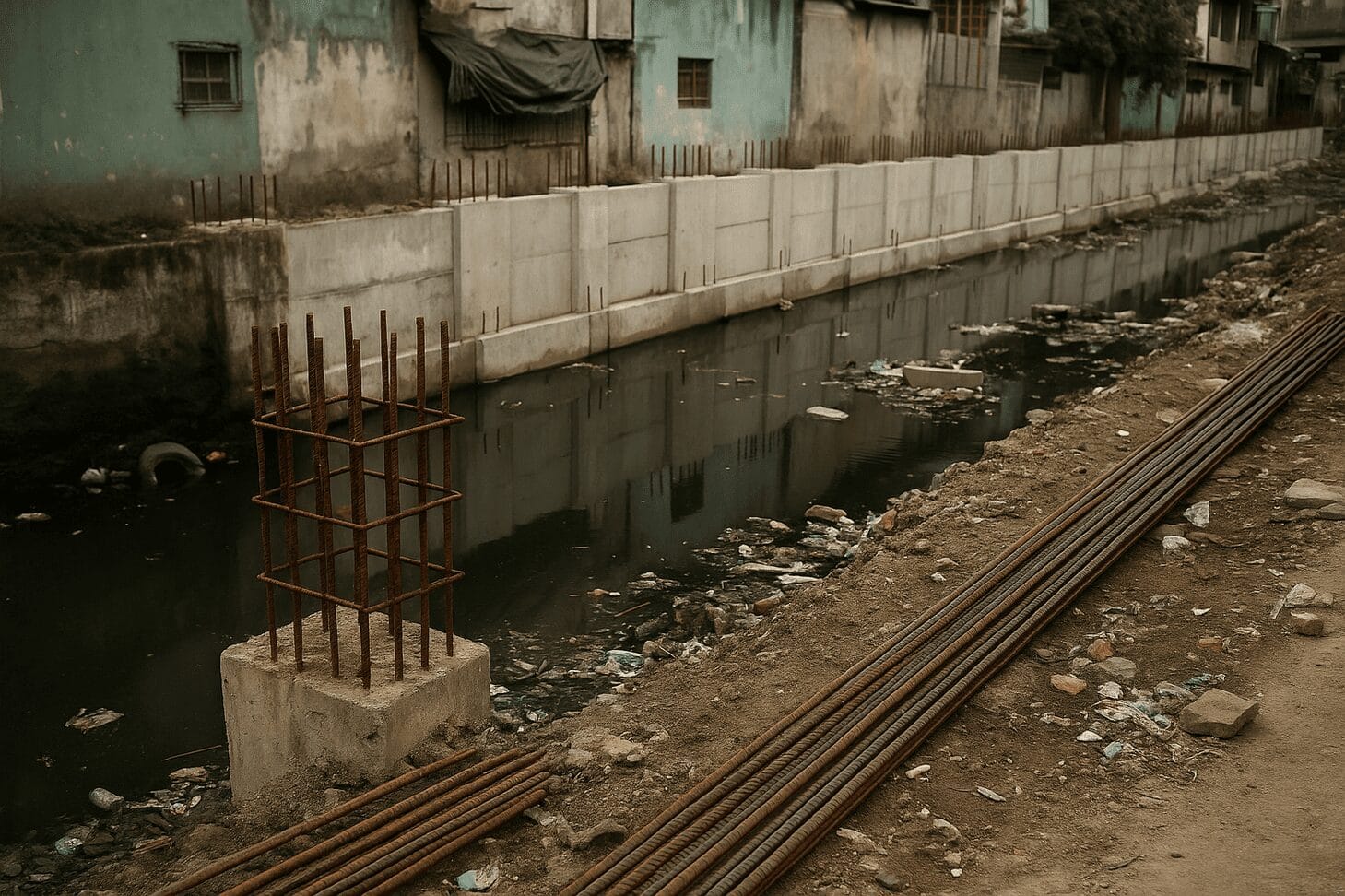
Flooding has been a relentless adversary in the Philippines. From the plains of Central Luzon to the densely packed streets of Metro Manila, Filipinos have lived with the seasonal dread of monsoon rains and typhoons. The government, fully aware of this reality, has poured billions into infrastructure projects meant to alleviate the problem. Yet, year after year, floodwaters rise, properties are destroyed, and lives are lost.
The persistence of these problems raises a grim question: Why, despite the massive resources allocated, do floods remain so devastating? The uncomfortable answer lies in corruption in Philippine governments flood control projects—a decades-long pattern of mismanagement, kickbacks, and misuse of public funds that undermines both progress and trust.
This article takes a comprehensive look at the issue, exploring its roots, manifestations, impacts, and possible solutions.
The Philippines’ Long Struggle Against Flooding
The Philippines sits at the crossroads of natural vulnerability. As part of the Pacific Ring of Fire and the typhoon belt, the archipelago experiences an average of 20 typhoons a year. Rivers overflow, drainage systems collapse, and coastal communities face storm surges. Add to this urban congestion, unregulated land use, and climate change, and the stage is set for recurring disasters.
Flooding is not just an inconvenience. It displaces families, disrupts education, spreads diseases like leptospirosis and dengue, and paralyzes commerce. In rural areas, it wipes out crops and livestock. In urban centers, it damages infrastructure and traps workers in gridlocked traffic for hours.
Given this reality, flood control is supposed to be a national priority. The government has announced countless programs—from dredging the Pasig River to constructing dikes in Pampanga and rehabilitating waterways in Mindanao. But despite billions allocated, results remain elusive. This disconnect points directly to corruption in Philippine governments flood control projects, which prevents these initiatives from achieving their intended impact.
How Corruption Infects Flood Control Projects
Corruption does not manifest in a single form. It seeps through every stage of project planning, bidding, and execution. Flood control initiatives, with their enormous budgets and technical complexity, are especially susceptible.
Overpriced Contracts and Procurement Fraud
One of the most common tactics is overpricing. Cement, steel, sandbags, and excavation services are listed at double or triple their actual cost. Politicians and contractors then pocket the excess. For instance, a simple drainage canal that could be built for ₱5 million might end up costing ₱15 million on paper. This artificial inflation drains public funds while delivering no additional benefit.
Ghost Projects
Equally notorious are “ghost projects”—initiatives that exist only on paper. Budgets are approved, contracts are signed, and funds are released, but no canal is dug, no dike is raised, and no pumping station is built. Citizens only realize the scam when heavy rains arrive and nothing has improved. Ghost projects epitomize infrastructure corruption Philippines, where paper trails suggest progress but communities remain defenseless.
Substandard Construction
When projects are built, many are deliberately executed with substandard materials. Instead of reinforced concrete, hollow blocks may be used. Instead of proper dredging, only superficial excavation is done. The result: infrastructure that collapses under the first significant rainfall. Not only does this endanger lives, it necessitates “repair projects” that allow another round of contracts and corruption.
Kickbacks and Bribery
Kickbacks form the grease that keeps the corrupt machine running. Contractors routinely provide bribes to local officials to secure project approvals. These kickbacks can amount to 20–30% of the project’s budget. This practice ensures that projects are awarded not to the most capable builders but to those most willing to bribe.
Political Favoritism and Pork Barrel-Style Allocations
Flood control projects are often concentrated in areas favored by powerful politicians, not necessarily in the communities that need them most. A senator’s or congressman’s district may suddenly receive dozens of small “drainage projects,” many of which are redundant or unnecessary, while more flood-prone regions are neglected. This politicization of projects ensures maximum vote-buying potential but leaves disaster preparedness weak nationwide.
All these practices reveal how entrenched corruption in Philippine governments flood control projects is in the political system.
The Human and Economic Consequences
The real tragedy of corruption is not the stolen pesos but the suffering it causes ordinary Filipinos.
- Communities at Risk
When flood control infrastructure fails, lives are directly endangered. Residents of Marikina, Malabon, Navotas, and Pampanga face yearly displacement. Many spend weeks in evacuation centers with little food or privacy. - Economic Setbacks
Floods cost billions annually in damages. Roads, bridges, and rail systems are submerged, halting transportation. Businesses close for days or weeks, while agricultural losses in rice-producing provinces cripple the food supply. - Poverty Cycle Entrapment
Flooding disproportionately affects the poor, who often live in informal settlements along rivers and esteros (waterways). When homes are washed away, families lose not just property but livelihoods. Recovery is slow, trapping them in poverty. - Public Disillusionment
When citizens repeatedly witness misuse of public funds Philippines in flood management, they lose faith in governance. Skepticism grows, making it harder for even honest officials to implement reforms.
Flooding thus becomes more than a natural hazard; it is a social and political wound deepened by corruption.
Climate Change as a Force Multiplier
Climate change has made rainfall patterns more extreme, sea levels higher, and storms stronger. What used to be a “20-year flood” now occurs every few years. In this context, effective flood management Philippines should be an urgent national mission.
Yet the opposite happens: climate funds are diverted through overpricing and ghost projects. Watershed rehabilitation is underfunded. River dredging is left unfinished. Mangrove forests—natural flood barriers—are sacrificed for commercial development with political backing.
The combination of climate change and corruption in Philippine governments flood control projects creates a dangerous double burden: intensifying disasters with weakening defenses.
Metro Manila: A Case Study in Mismanagement
Metro Manila illustrates the magnitude of the crisis. Billions have been poured into flood control projects since the 1970s. Pumping stations were built, river dredging promised, and master plans announced. Yet after Typhoon Ondoy (2009), Ulysses (2020), and subsequent monsoon rains, large portions of the city remain underwater.
Why? Because many pumping stations are decades old and poorly maintained. Some were left incomplete. Drainage projects are obstructed by informal settlements. River rehabilitation programs stop midway due to missing funds. This failure is not simply technical—it reflects infrastructure corruption Philippines, where projects are treated as cash cows rather than public lifelines.
Oversight Institutions and Their Limitations
The Philippines has institutions like the Commission on Audit (COA), which regularly uncovers irregularities in flood control spending. Audit reports have revealed overpriced projects, unused materials, and abandoned construction sites. The Office of the Ombudsman has also investigated local officials for graft linked to flood management.
However, enforcement is weak. Cases drag on for years in the courts, and many officials escape accountability. Political dynasties shield their members. This culture of impunity emboldens further corruption. Until oversight institutions are empowered and insulated from politics, corruption in Philippine governments flood control projects will persist.
Citizen Awareness and Civil Society Pressure
Filipinos are not passive. Social media amplifies anger every time floods submerge entire cities despite massive spending. Grassroots organizations monitor projects and push for transparency. Universities conduct independent assessments of flood control systems.
This civic engagement is essential, but without official cooperation, its impact is limited. Still, it represents a crucial check on misuse of public funds Philippines and provides momentum for broader reforms.
Paths Toward Reform
Reversing decades of corruption will not be easy, but several reforms are feasible:
- Transparency Portals: Budgets and progress reports should be published online, accessible to anyone. Citizens must see where each peso goes.
- Independent Monitoring: Civil society, universities, and media organizations should be empowered to inspect construction sites and audit progress.
- Strict Penalties: Graft convictions must result in immediate dismissal, asset seizure, and imprisonment to deter corruption.
- Technology Use: Satellite imagery, drones, and GIS mapping can track progress and prevent ghost projects.
- Community Involvement: Residents should have a say in project planning, ensuring solutions address local realities rather than political agendas.
If implemented, these measures could drastically reduce corruption in Philippine governments flood control projects and restore faith in governance.
Beyond Flooding: The Broader Governance Crisis
Flood control corruption is only one symptom of a wider disease: systemic corruption in Philippine politics. Roads, schools, health centers, and housing projects all suffer similar fates. Addressing corruption in flood management could serve as a model for tackling other infrastructure issues.
It is not simply about preventing floods—it is about redefining governance, ensuring disaster preparedness Philippines is genuine, and restoring accountability to a system long plagued by greed.
Conclusion: Accountability as the First Step
Flooding will always threaten the Philippines due to its geography, but the scale of the problem today is amplified by human greed. Corruption in Philippine governments flood control projects robs citizens not just of money but of safety, security, and dignity.
If the Philippines is to move forward, it must confront this corruption head-on. Only through transparency, strong enforcement, and citizen vigilance can the cycle of waste be broken. Ending this corruption would not only save lives during storms—it would also mark a turning point in the nation’s fight for clean governance and true disaster resilience.
More from The Daily Mesh:
- Operation Sindoor: India’s Missile Strikes on Pakistan Escalate Regional Tensions
- Pope Leo XIV: The Journey of Robert Francis Prevost to the Papacy
- Kimchi: Korea’s Cultural Treasure and Its Journey to the West