


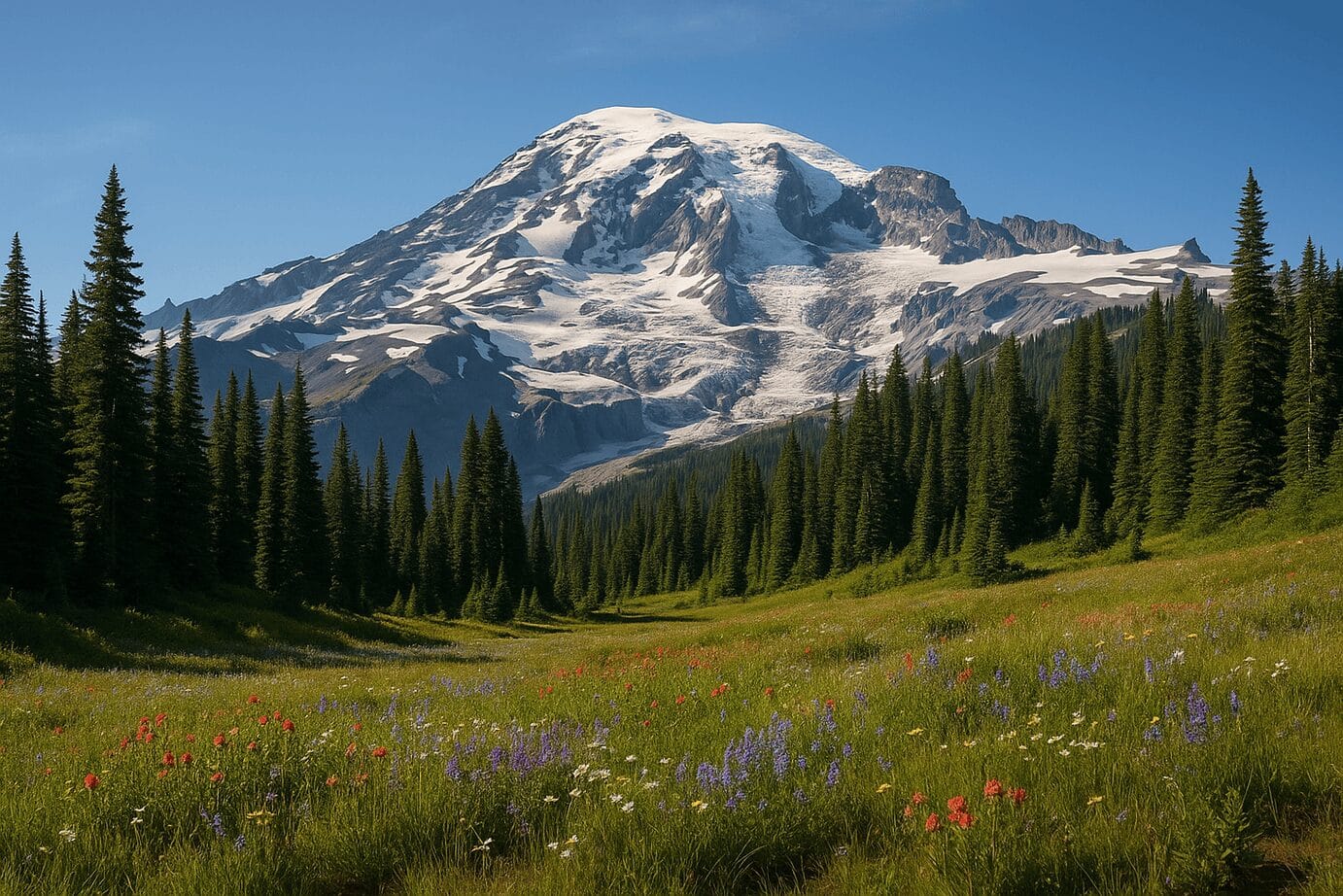
Standing at 14,410 feet above sea level, Mount Rainier dominates the skyline of Washington State like a sentinel watching over the Pacific Northwest. This massive stratovolcano, encased in 35 square miles of glaciers and snowfields, draws over two million visitors annually to Mount Rainier National Park, making it one of the most visited national parks in the United States. Whether you’re an experienced mountaineer seeking to summit its icy peak or a family looking for scenic drives and gentle nature walks, this natural wonder offers something extraordinary for everyone.
The Geological Marvel Behind the Mountain
Mount Rainier National Park encompasses an active volcano that last erupted approximately 1,000 years ago. Scientists classify it as one of the most dangerous volcanoes in the world due to its proximity to major population centers in Seattle and Tacoma. The mountain’s volcanic activity has shaped the landscape over millennia, creating dramatic valleys, pristine alpine meadows, and rugged ridgelines that define the park’s character.
The volcano consists of layers of hardened lava, pumice, and volcanic ash that have accumulated over 500,000 years. Twenty-six named glaciers flow down from the summit, including the Emmons Glacier, the largest glacier by area in the contiguous United States. These rivers of ice carve the mountain’s flanks, creating the stunning features that attract photographers and nature enthusiasts from around the globe.
The United States Geological Survey maintains constant monitoring of Mount Rainier’s volcanic activity through a network of seismometers and GPS stations. While the mountain remains quiet for now, its classification as an active volcano reminds visitors that they’re standing on one of nature’s most powerful forces.
Paradise: Where Heaven Meets Earth
The Paradise area of Mount Rainier National Park ranks among the most visited destinations within the park, and for good reason. Located at 5,400 feet elevation on the mountain’s south slope, Paradise receives an average of 640 inches of snow annually, making it one of the snowiest places on Earth. The Henry M. Jackson Visitor Center serves as the hub for Paradise, offering exhibits about the park’s geology, ecology, and climbing history.
During summer months, the subalpine meadows around Paradise explode with wildflowers. Lupines, Indian paintbrush, avalanche lilies, and dozens of other species create a tapestry of colors that photographers dream about. The Skyline Trail, a popular hiking route from Paradise, winds through these meadows and offers breathtaking views of the mountain’s glaciated summit.
Winter transforms Paradise into a snowy wonderland. Cross-country skiers and snowshoers take advantage of the deep snowpack, while the historic Paradise Inn, built in 1916, provides rustic accommodations with massive timber beams and cozy fireplaces. The inn’s location offers unparalleled access to winter recreation opportunities.
Sunrise: The Northeastern Gateway
At 6,400 feet, Sunrise holds the distinction of being the highest point reachable by vehicle in Mount Rainier National Park. The Sunrise area provides a different perspective of the mountain compared to Paradise, with drier conditions and more dramatic views of Emmons Glacier. The Sunrise Visitor Center opens during summer months, typically from early July through September, depending on snow conditions.
The drive to Sunrise takes visitors through ancient forests of Douglas fir, western red cedar, and western hemlock. Wildlife sightings are common along this route, with black-tailed deer, elk, and occasionally black bears making appearances. Marmots whistle from rocky outcrops, and Clark’s nutcrackers call from whitebark pines at higher elevations.
Several trails radiate from Sunrise, including the popular Burroughs Mountain Trail. This route climbs onto a barren alpine plateau where only the hardiest plants survive. Standing on Burroughs Mountain, hikers gain a perspective of Mount Rainier’s immense scale, with the summit appearing close enough to touch despite being thousands of feet higher.
The Wonderland Trail: A Circumnavigation of Greatness
The Wonderland Trail represents one of the premier backpacking experiences in America. This 93-mile loop circles Mount Rainier National Park, passing through all major life zones from lowland forests to alpine tundra. Completing the entire trail typically requires 10-14 days, though many hikers tackle smaller sections as day hikes or overnight trips.
The trail gains and loses approximately 22,000 feet of elevation as it crosses ridges, descends into valleys, and traverses beneath massive glaciers. Backcountry campsites along the route require advance reservations, and competition for permits during peak season can be intense. Those who complete the full circuit describe it as a transformative experience, offering intimate encounters with the mountain’s diverse ecosystems.
Each section of the Wonderland Trail presents unique challenges and rewards. The northern section passes through carbon river valley and across spray park, where wildflower displays rival those at Paradise. The eastern portion provides close-up views of glaciers and requires crossing several suspension bridges over glacial streams. The western and southern sections traverse ancient forests and climb over high passes with panoramic vistas.
Wildlife of the Mountain
Mount Rainier National Park protects habitat for 65 mammal species, 182 bird species, and countless invertebrates. The park’s diverse elevations and ecosystems create niches for species ranging from tiny pikas to massive Roosevelt elk. Understanding and respecting wildlife remains crucial for both animal welfare and visitor safety.
Black bears inhabit all areas of the park from spring through fall. These omnivores feast on berries, insects, and vegetation, occasionally causing problems when they associate humans with food. Park regulations require proper food storage, and rangers educate visitors about maintaining safe distances from these powerful animals.
Mountain goats, though not native to the area, established populations in the park during the 20th century. These sure-footed climbers navigate near-vertical cliffs with ease, and hikers sometimes encounter them on high mountain trails. The park has implemented management strategies to address ecological impacts from these non-native ungulates.
Bird enthusiasts find Mount Rainier National Park particularly rewarding. Gray jays, nicknamed “camp robbers” for their boldness around picnic areas, entertain visitors with their antics. Steller’s jays flash brilliant blue plumage in forested areas. At higher elevations, white-tailed ptarmigan blend perfectly with rocky terrain, their plumage changing from brown in summer to white in winter.
Climbing the Giant
Approximately 10,000 people attempt to summit Mount Rainier each year, with success rates hovering around 50 percent. Climbing this mountain requires technical mountaineering skills, proper equipment, and respect for the extreme conditions found at high altitude. Most climbers spend 2-3 days on their summit bids, acclimatizing at Camp Muir (10,188 feet) or Camp Schurman (9,500 feet) before attempting the final push.
The Disappointment Cleaver route via Camp Muir represents the most popular climbing route. This path ascends the mountain’s south side, negotiating crevasse fields, steep snow slopes, and exposed rock sections. Climbers typically begin their summit push around midnight, hoping to reach the crater rim by sunrise and descend before afternoon weather deteriorates.
Guide services operating in Mount Rainier National Park provide instruction and support for climbers lacking experience. These companies teach ice axe arrest, crampon technique, crevasse rescue, and other essential skills. Even experienced mountaineers benefit from hiring guides who know current route conditions and weather patterns.
Climbing permits are required for all attempts above 10,000 feet or on any glacier. The park service emphasizes that Mount Rainier should not be anyone’s first mountaineering experience. The mountain’s combination of high altitude, extreme weather, and technical terrain demands respect and preparation.
Planning Your Visit
Timing your visit to Mount Rainier National Park significantly impacts your experience. The park remains open year-round, but weather and snow conditions limit access to many areas during winter and spring. The Paradise area typically becomes accessible by vehicle in May, while Sunrise doesn’t open until early July.
Peak wildflower season runs from mid-July through early August, coinciding with the busiest visitor period. Weekends during this window see parking lots fill by mid-morning, particularly at Paradise. Arriving early or visiting on weekdays provides a more peaceful experience. September offers a sweet spot with smaller crowds, autumn colors, and generally stable weather.
Entrance fees for Mount Rainier National Park are $30 per vehicle for a seven-day pass, $25 for motorcycles, and $15 for individuals entering on foot or bicycle. Annual passes and federal recreation passes are honored. The fee supports park operations, trail maintenance, and visitor services.
Four entrance stations provide access to different areas of the park. The Nisqually Entrance on the southwest side remains open year-round and provides access to Longmire and Paradise. The White River Entrance leads to Sunrise. The Stevens Canyon Entrance connects the Paradise and Okanogan areas. The Carbon River Entrance accesses the northwest section of the park.
Accommodations and Camping
Lodging options within Mount Rainier National Park include the historic Paradise Inn and the National Park Inn at Longmire. Both properties offer comfortable rooms with rustic charm and convenient access to trails and visitor centers. Reservations for peak season should be made months in advance, as these limited rooms book quickly.
The park operates five developed campgrounds with a total of approximately 500 sites. Cougar Rock and Ohanapecosh campgrounds accept reservations, while White River, Mowich Lake, and Ipsut Creek operate on a first-come, first-served basis. Most campgrounds open from late May or June through September, depending on snow levels.
Backcountry camping requires permits available through a reservation system. Cross-country zones and designated backcountry camps provide options for experienced wilderness travelers. Bear canisters or approved food storage methods are mandatory in the backcountry.
Gateway communities surrounding the park offer additional lodging, dining, and services. Ashford, Packwood, and Enumclaw provide convenient bases for exploring Mount Rainier National Park while offering more extensive amenities than are available within park boundaries.
The Human History
Indigenous peoples, including the Cowlitz, Muckleshoot, Nisqually, Puyallup, Squaxin Island, and Yakama tribes, have connections to Mount Rainier stretching back thousands of years. These communities knew the mountain as Tahoma or Tacoma, names that translate roughly to “mother of waters” in recognition of the rivers flowing from its glaciers. They traveled to high meadows for hunting, gathering, and spiritual purposes.
European American exploration of the region began in earnest during the late 19th century. The first documented summit of Mount Rainier occurred in 1870, led by Hazard Stevens and P.B. Van Trump with guidance from Sluiskin, a Yakama Indian. Their successful climb sparked interest in the mountain and the surrounding wilderness.
Congress established Mount Rainier National Park in 1899, making it the fifth national park in the United States. Early park advocates, including naturalist John Muir, recognized the area’s unique ecological and scenic values. The park’s creation protected old-growth forests, subalpine meadows, and the mountain itself from logging and mining interests.
Historic structures throughout Mount Rainier National Park reflect the National Park Service’s rustic architectural style. The Paradise Inn, Longmire buildings, and various patrol cabins exemplify this design philosophy, which emphasizes harmony between built structures and natural landscapes. Several of these buildings hold National Historic Landmark status.
Photography Paradise
Photographers find endless inspiration within Mount Rainier National Park. The mountain’s dramatic profile, colorful wildflower meadows, ancient forests, and wildlife create countless opportunities for stunning images. Understanding optimal lighting conditions and locations helps photographers capture the mountain’s beauty.
Reflection lakes, located along the road between Paradise and the Stevens Canyon entrance, offer classic mirror images of Mount Rainier when conditions cooperate. Early morning typically provides the calmest water and best light. Arriving before sunrise allows photographers to capture the mountain’s alpenglow, when the summit glows pink and orange in the first light of day.
Tipsoo Lake, near Chinook Pass, provides another excellent reflection opportunity with easier accessibility than many locations. The lake sits right beside the highway, making it accessible to photographers who cannot hike long distances. Wildflowers surrounding the lake add foreground interest to images.
Wildlife photography in the park requires patience and appropriate equipment. Telephoto lenses allow photographers to maintain safe distances while capturing frame-filling images. The meadows around Sunrise and Paradise offer good opportunities for photographing marmots, especially during morning and evening hours when these animals are most active.
Conservation Challenges
Mount Rainier National Park faces numerous conservation challenges in the 21st century. Climate change impacts are particularly visible in the park’s glaciers, which have lost significant mass over the past century. Scientists estimate that Mount Rainier’s glaciers have shrunk by approximately 25 percent since 1900, with accelerating losses in recent decades.
These glacial changes affect the park’s ecosystems in multiple ways. Rivers and streams that depend on glacial meltwater experience altered flow patterns. Reduced snowpack affects wildflower timing and success. Wildlife populations must adapt to changing habitat conditions. Park managers work to understand these impacts and develop appropriate management responses.
Invasive species pose another significant threat. Non-native plants can outcompete native species, altering ecosystem dynamics. The park implements control programs targeting particularly problematic invasives. Visitors can help by cleaning boots and equipment between hikes to avoid spreading seeds.
Balancing visitor use with resource protection remains an ongoing challenge. The park’s popularity creates impacts on trails, campsites, and wildlife. The National Park Service employs various strategies to manage these impacts, including permit systems, trail maintenance programs, and visitor education efforts.
Essential Tips for First-Time Visitors
Preparation makes the difference between a mediocre visit and an extraordinary experience at Mount Rainier National Park. Weather can change rapidly at high elevations, so layered clothing is essential even during summer. Temperatures at Paradise or Sunrise can be 20-30 degrees cooler than in lowland areas.
Hydration and sun protection rank among the most important health considerations. The combination of altitude and intense ultraviolet radiation at higher elevations increases risks of dehydration and sunburn. Carrying adequate water and applying sunscreen prevents uncomfortable consequences.
Trail conditions vary significantly throughout the season. Early summer brings snowmelt and muddy paths. Late summer offers dry trails but also dusty conditions. Microspikes or traction devices prove useful well into July on many higher elevation trails. Checking current conditions before your visit helps with appropriate gear selection.
Wildlife encounters enrich park visits, but maintaining proper distances protects both animals and people. Park regulations require staying at least 25 yards from most wildlife and 100 yards from bears. Never feed animals, as human food causes serious health problems for wildlife and creates dangerous situations.
Beyond the Mountain
While Mount Rainier dominates the landscape, the park protects remarkable features beyond the volcano itself. Grove of the Patriarchs, a short trail near the Stevens Canyon entrance, leads to an island of massive old-growth Douglas firs and western red cedars. Some of these trees exceed 1,000 years in age and dwarf human visitors.
Box Canyon, along the road between Paradise and Okanogan, demonstrates the erosive power of water. The Muddy Fork of the Cowlitz River has carved a narrow gorge through solid rock, creating a dramatic feature easily viewed from a short trail. The canyon’s depth and narrowness impress visitors who might otherwise focus solely on the mountain.
The Carbon River valley in the park’s northwest corner offers a glimpse of a temperate rainforest ecosystem. Moss-draped trees, ferns, and persistent rainfall create an atmosphere distinct from the mountain’s drier eastern slopes. The area receives less visitation than Paradise or Sunrise, providing opportunities for solitude.
Christine Falls, visible from the road between Longmire and Paradise, exemplifies the park’s numerous waterfalls. The falls drop through a stone arch, creating a photogenic scene that draws frequent stops. Dozens of other waterfalls throughout Mount Rainier National Park reward hikers willing to venture onto trails.
Making Memories That Last
A visit to Mount Rainier National Park creates memories that endure long after returning home. Whether you’re watching sunrise paint the mountain pink from a subalpine meadow, listening to a pika’s sharp call echo off rocky walls, or simply breathing in the clean mountain air, the park offers experiences that reconnect us with the natural world.
The mountain stands as a reminder of nature’s power and beauty, a landscape shaped by fire and ice over hundreds of thousands of years. It hosts ecosystems from ancient rainforests to barren volcanic slopes where nothing grows. It challenges climbers and welcomes casual visitors with equal grace.
For those willing to venture beyond their car, Mount Rainier National Park reveals its deepest secrets. The quiet of a backcountry camp, the satisfaction of reaching a high pass after a steep climb, the surprise of spotting a black bear digging for roots in a meadow—these moments define the park experience.
The mountain will stand long after our individual visits end. Its glaciers will continue carving valleys. Its meadows will bloom each summer. Its summit will glow in the alpenglow of countless sunrises. Our responsibility is to experience this place with respect, to leave it unimpaired for future generations, and to carry its lessons about the natural world into our daily lives.
Whether you spend a single day driving the park roads or dedicate weeks to exploring its backcountry, Mount Rainier National Park offers something profound. It reminds us that some places exist on a scale beyond human comprehension, that beauty persists even in harsh environments, and that preserving wild places matters for reasons both practical and spiritual.
Stand in an alpine meadow with the mountain rising above. Feel the wind carrying the scent of wildflowers and glacial melt. Listen to marmots whistling their warnings and water cascading down rocky cliffs. These experiences await at Mount Rainier National Park, where every visit promises discovery and every view inspires wonder.
More from The Daily Mesh:
- The Truth About Social Media Identity: How Your Online Persona Is Rewriting Who You Really Are
- Why Mont Blanc France Remains Europe’s Most Dangerous Beautiful Mountain Peak
- Nike Zoom Fly 6 Review: The Everyday Speed Demon You Didn’t Know You Needed