


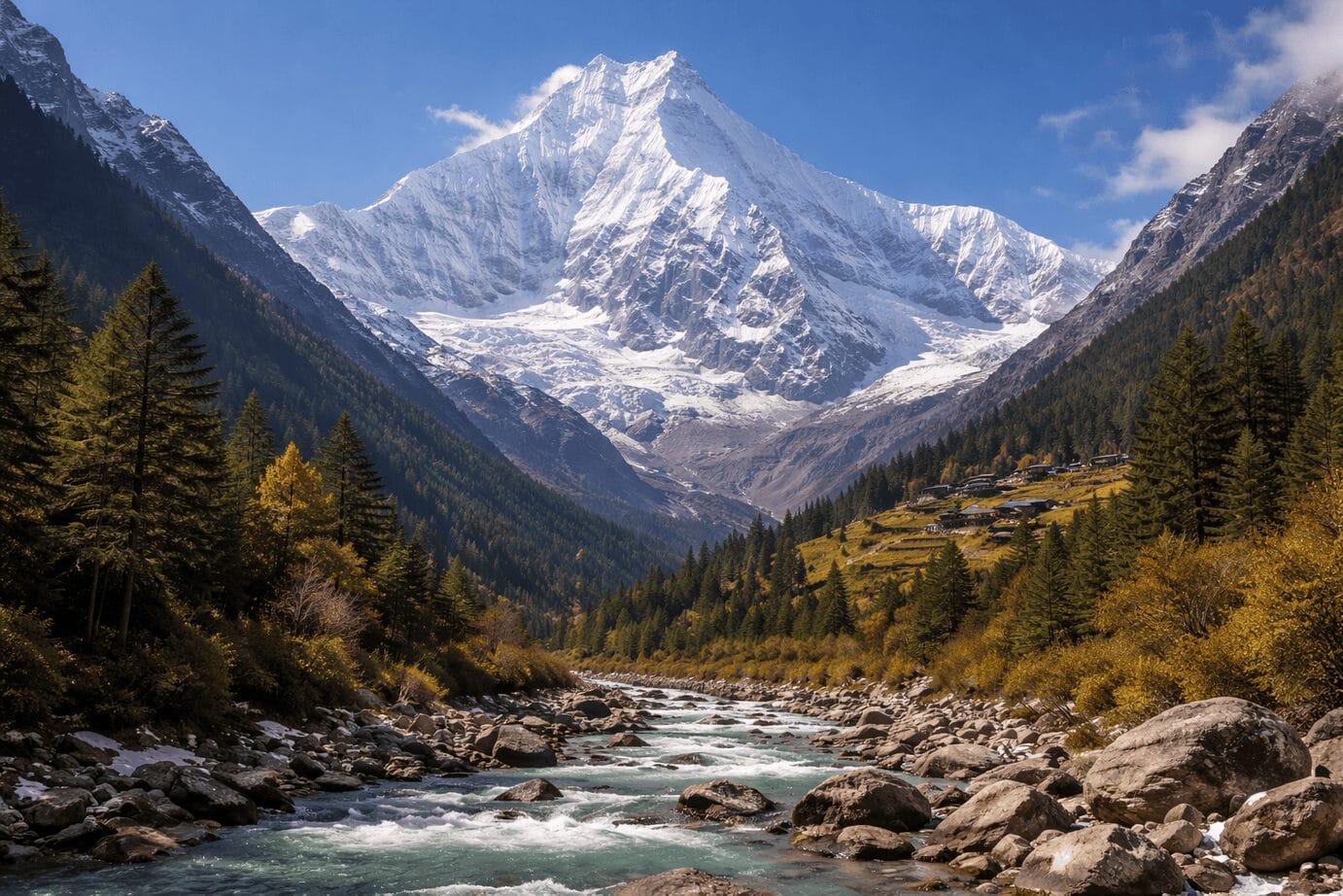
Rising majestically to 8,163 meters (26,781 feet) above sea level, Mount Manaslu Nepal stands as the eighth-highest mountain in the world and one of the most spectacular peaks in the entire Himalayan range. Located in the Mansiri Himal region of west-central Nepal, this imposing giant has captured the imagination of mountaineers, trekkers, and adventure seekers since it was first conquered in 1956.
The name “Manaslu” derives from the Sanskrit word “manasa,” meaning “intellect” or “soul,” which is why this magnificent peak is often referred to as the “Mountain of the Spirit.” This poetic designation reflects not only the mountain’s spiritual significance to local communities but also the profound impact it has on those who dare to explore its slopes and surrounding valleys.
The Geography and Location of Mount Manaslu Nepal
Mount Manaslu Nepal dominates the landscape of the Gorkha District in the Gandaki Province of Nepal. The mountain sits approximately 64 kilometers east of Annapurna, making it part of an extraordinary concentration of high-altitude peaks that draw adventurers from across the globe. The Manaslu massif forms the eastern boundary of the Annapurna range, separated by the dramatic Burhi Gandaki River gorge.
The mountain’s position creates a unique microclimate that influences weather patterns throughout the region. Its massive bulk intercepts monsoon clouds moving north from the Indian subcontinent, creating distinct wet and dry seasons that shape both the climbing conditions and the biodiversity of the surrounding conservation area.
The Manaslu Conservation Area, established in 1998, encompasses 1,663 square kilometers of pristine wilderness surrounding the mountain. This protected region includes diverse ecosystems ranging from subtropical forests at lower elevations to arctic conditions near the summit, supporting an incredible array of flora and fauna including snow leopards, Himalayan black bears, and red pandas.
The History of Climbing Mount Manaslu Nepal
The mountaineering history of Mount Manaslu Nepal began in earnest in the 1950s when the peak attracted attention from international climbing expeditions. Japanese climbers showed particular interest in the mountain, conducting reconnaissance missions in 1952 and 1953. However, local opposition and concerns about the sacred nature of the peak initially prevented serious summit attempts.
The first successful ascent of Mount Manaslu Nepal occurred on May 9, 1956, when Toshio Imanishi and Gyalzen Norbu, members of a Japanese expedition, reached the summit via the northeast face. This achievement marked a significant milestone in Himalayan mountaineering and opened the door for future expeditions. The route they pioneered remains one of the most popular approaches to the summit today.
Tragically, the mountain has also witnessed numerous disasters. In 1972, an avalanche killed sixteen climbers, marking one of the deadliest incidents in Himalayan climbing history at that time. More recently, in September 2012, an avalanche at Camp 3 claimed the lives of eleven climbers, serving as a stark reminder of the mountain’s inherent dangers.
Despite these tragedies, Mount Manaslu Nepal continues to attract hundreds of climbers annually. The mountain has become increasingly popular as an “eight-thousander” that offers a slightly less technical challenge than some of its neighbors, though this reputation can be misleading. The peak demands respect, proper acclimatization, and experienced guidance.
Climbing Routes on Mount Manaslu Nepal
The standard climbing route on Mount Manaslu Nepal follows the northeast face, the same approach used during the first ascent. This route typically begins from the village of Samagaon and proceeds through a series of camps established at strategic elevations. Climbers usually establish Base Camp at approximately 4,800 meters, followed by Camp 1 at 5,700 meters, Camp 2 at 6,400 meters, Camp 3 at 6,800 meters, and Camp 4 at 7,400 meters before making the final summit push.
The northeast face route involves navigating crevasse fields, ice walls, and steep snow slopes. The final ascent from Camp 4 to the summit is particularly demanding, requiring climbers to traverse exposed ridges and negotiate technical sections while dealing with extreme altitude and unpredictable weather conditions.
Alternative routes exist on Mount Manaslu Nepal, including approaches via the southwest face and the northwest ridge. These routes are considerably more technical and see far fewer attempts. The southwest face, in particular, presents formidable challenges with sustained steep climbing on mixed rock and ice terrain.
Most commercial expeditions on Mount Manaslu Nepal follow the standard route and last approximately six weeks from start to finish. This timeframe allows for proper acclimatization rotations, weather window identification, and contingency planning. Spring (April-May) and autumn (September-October) are the primary climbing seasons, with autumn generally offering more stable weather conditions.
The Manaslu Circuit Trek
For those not ready to attempt the summit of Mount Manaslu Nepal, the Manaslu Circuit Trek offers an extraordinary alternative that circumnavigates the mountain and provides intimate access to its surrounding landscapes and cultures. This trek has gained tremendous popularity in recent years as trekkers seek less crowded alternatives to the classic Annapurna and Everest Base Camp routes.
The Manaslu Circuit typically takes 14-18 days to complete and crosses the Larkya La Pass at 5,106 meters, the highest point on the trek. The route traverses through diverse terrain, from terraced farmlands and subtropical forests to high alpine meadows and glacial valleys. Trekkers experience dramatic shifts in landscape, climate, and culture as they circle Mount Manaslu Nepal.
One of the trek’s greatest attractions is its cultural richness. The route passes through traditional Gurung and Tibetan villages where ancient customs remain largely intact. Communities like Samagaon and Samdo offer glimpses into traditional mountain lifestyles, with Buddhist monasteries, prayer flags, and mani walls creating a deeply spiritual atmosphere beneath the towering presence of Mount Manaslu Nepal.
The trek requires special permits, including the Manaslu Restricted Area Permit, which can only be obtained through registered trekking agencies. This restriction helps control visitor numbers and protect both the environment and local culture. Trekkers must also travel with a registered guide, ensuring safety and providing economic benefits to local communities.
Best Time to Visit Mount Manaslu Nepal
Timing is everything when planning an expedition or trek to Mount Manaslu Nepal. The mountain experiences dramatic seasonal variations that profoundly impact accessibility, safety, and overall experience.
The pre-monsoon spring season from late March through May offers the first major climbing and trekking window. During these months, temperatures gradually warm, snowfall decreases, and weather patterns generally stabilize. Spring on Mount Manaslu Nepal brings blooming rhododendrons at lower elevations and increasingly reliable summit weather windows. However, spring can also bring afternoon clouds and occasional storms as the monsoon season approaches.
The monsoon season from June through August brings heavy rainfall to lower elevations and significant snowfall higher on the mountain. This period is generally avoided for climbing and trekking due to dangerous conditions including avalanche risk, trail washouts, and poor visibility. The few expeditions that attempt Mount Manaslu Nepal during monsoon face extremely challenging conditions.
The post-monsoon autumn season from September through November is widely considered the best time to visit Mount Manaslu Nepal. The monsoon clears the atmosphere, creating crystal-clear visibility and stable weather patterns. Autumn offers the highest success rates for summit attempts and the most pleasant conditions for trekking. Daytime temperatures are moderate, nights are cold but manageable, and the mountain reveals itself in all its glory against deep blue skies.
Winter from December through February brings extreme cold and harsh conditions to Mount Manaslu Nepal. While the mountain has been climbed in winter, these expeditions are rare and require exceptional preparation, equipment, and determination. Winter trekking is possible at lower elevations but becomes increasingly challenging as altitude increases.
Preparing for Mount Manaslu Nepal
Whether planning a summit expedition or trekking the circuit, proper preparation is essential for a safe and successful experience on Mount Manaslu Nepal. Physical preparation should begin months in advance, with focus on cardiovascular endurance, leg strength, and mental resilience.
For summit expeditions on Mount Manaslu Nepal, prior high-altitude climbing experience is virtually mandatory. Most reputable guiding companies require climbers to have successfully summited at least one peak above 6,000 meters and to demonstrate competence in technical skills including crampon use, ice axe arrest, fixed rope ascension, and crevasse rescue. Previous experience on other eight-thousanders is highly valuable.
The Manaslu Circuit Trek, while not requiring technical climbing skills, still demands good physical fitness and proper preparation. Trekkers should be capable of walking six to eight hours daily with a daypack, often on steep and uneven terrain. Training hikes with elevation gain help prepare muscles and cardiovascular systems for the demands of high-altitude trekking.
Acclimatization cannot be rushed. The human body needs time to adjust to decreasing oxygen levels, and proper acclimatization schedules are built into responsible expedition and trek itineraries. Acute mountain sickness (AMS) can affect anyone regardless of fitness level, making it crucial to recognize symptoms, communicate honestly with guides, and descend immediately if serious symptoms develop.
Permits and Regulations
Visiting Mount Manaslu Nepal requires navigating Nepal’s permit system, which balances conservation goals with tourism development. Multiple permits are necessary depending on your specific plans.
For climbing expeditions, a climbing permit from the Nepal Mountaineering Association is required. Permit fees vary by season, with spring and autumn permits being more expensive than winter permits. Additionally, climbers need the Manaslu Restricted Area Permit and must be part of an organized expedition with a registered trekking agency.
Trekkers on the Manaslu Circuit need the Manaslu Restricted Area Permit, which costs vary depending on the season and the specific areas you plan to visit. The Manaslu Conservation Area Permit (MCAP) is also required. These permits can only be obtained through registered trekking agencies, and trekkers must be accompanied by a licensed guide.
The permit system serves multiple purposes beyond revenue generation. It helps control visitor numbers to protect fragile ecosystems, ensures that economic benefits reach local communities, and provides a safety framework through the required guide system.
The Cultural Experience
The cultural dimension of visiting Mount Manaslu Nepal enriches the experience far beyond the physical challenge. The region is home to diverse ethnic groups including Gurungs, Tamangs, and people of Tibetan heritage who have inhabited these valleys for centuries.
Traditional villages along the trekking routes maintain lifestyles closely connected to the land and Buddhist spirituality. Gompas (monasteries) dot the landscape, their prayer wheels constantly turning and prayer flags sending blessings on mountain winds. The largest monastery in the region, located in Samagaon, welcomes visitors and offers insight into the spiritual practices that have sustained communities beneath Mount Manaslu Nepal for generations.
Local architecture reflects adaptations to the harsh mountain environment. Stone houses with flat roofs are designed to withstand heavy snow loads and strong winds. Interior spaces center around hearths that provide warmth and cooking facilities, with family life unfolding in these intimate settings.
The agricultural calendar shapes village life, with communities working collectively during planting and harvest seasons. Barley, buckwheat, and potatoes are staple crops, supplemented by livestock including yaks, which provide milk, meat, and transportation. Visitors to Mount Manaslu Nepal witness traditional farming practices largely unchanged by modernity.
Environmental Considerations
The pristine environment surrounding Mount Manaslu Nepal faces increasing pressure from growing tourism and climate change. The Manaslu Conservation Area was established to protect this fragile ecosystem, but conservation requires active participation from visitors as well as local communities.
Climate change impacts are visible throughout the region. Glaciers that feed rivers and sustain local agriculture are retreating measurably. Changes in precipitation patterns affect both local communities and the mountain’s climbing conditions. Research stations on Mount Manaslu Nepal monitor these changes, contributing valuable data to global climate science.
Responsible tourism practices are essential. Trekkers and climbers should adhere strictly to Leave No Trace principles, carrying out all non-biodegradable waste. Many expedition teams now hire porters specifically to carry waste down from high camps. Human waste management at base camps and along trekking routes requires careful planning and execution.
Supporting local economies through responsible spending helps conservation efforts by providing communities with economic incentives to protect their environment. Staying in locally owned teahouses, purchasing locally produced goods, and hiring local guides and porters ensures that tourism benefits reach the people who are stewards of the land around Mount Manaslu Nepal.
Safety Considerations
Safety on Mount Manaslu Nepal cannot be taken lightly. The mountain has claimed numerous lives over the decades, and even the trekking routes present serious risks if proper precautions aren’t followed.
Altitude-related illnesses represent the most common serious threat. Acute mountain sickness can progress rapidly to life-threatening high-altitude pulmonary edema (HAPE) or high-altitude cerebral edema (HACE). Proper acclimatization schedules, recognition of symptoms, and immediate descent when necessary are critical safety measures.
Avalanches pose significant danger, particularly during and after storms when fresh snow loads accumulate on steep slopes. The 2012 avalanche that killed eleven climbers serves as a tragic reminder. Expedition teams employ experienced guides who constantly assess avalanche risk and make conservative decisions about route timing and camp placement.
Weather on Mount Manaslu Nepal can change rapidly and dramatically. Clear morning skies can give way to afternoon storms bringing heavy snow, high winds, and dangerous visibility conditions. Modern weather forecasting has improved summit success rates, but unpredictability remains inherent to high-altitude mountaineering.
Communication systems including satellite phones and emergency beacons have improved rescue capabilities, but evacuations from high on Mount Manaslu Nepal remain extremely challenging. Helicopter rescues become impossible above certain altitudes and in poor weather conditions, meaning climbers may be on their own during emergencies.
The Future of Mount Manaslu Nepal
The future of Mount Manaslu Nepal depends on balancing increasing tourism interest with conservation needs and respect for local cultures. The mountain’s popularity continues to grow as climbers seek eight-thousanders with slightly better success rates than Everest or K2, while trekkers discover the Manaslu Circuit as an alternative to more crowded routes.
Sustainable tourism development requires infrastructure improvements without destroying the authentic character that makes the region special. Solar power installations, improved waste management systems, and upgraded trekking facilities can enhance the visitor experience while minimizing environmental impact.
Local communities increasingly recognize tourism’s economic potential but also express concerns about cultural erosion and environmental degradation. Successful models of community-based tourism are emerging, where villages collectively manage tourism services and share benefits equitably.
Climate change will continue reshaping the mountain environment. Adapting to these changes while maintaining access for climbers and trekkers presents ongoing challenges. Route conditions may shift as glaciers retreat and permafrost destabilizes, requiring flexible management approaches.
Conclusion
Mount Manaslu Nepal represents far more than just the eighth-highest point on Earth. It embodies the enduring allure of high mountains, the challenges that test human limits, and the rich cultural tapestry of Himalayan communities who call this region home. Whether viewed from the summit after an arduous expedition or from the trekking trails that circle its base, this magnificent peak commands respect and inspires awe.
For those who venture to Mount Manaslu Nepal, the experience extends beyond personal achievement. It offers opportunities to engage with remarkable landscapes, encounter different ways of life, and contribute to the sustainable development of remote mountain communities. The mountain challenges us physically while opening our minds to the beauty and fragility of high-altitude ecosystems.
As interest in Mount Manaslu Nepal continues growing, each visitor carries responsibility for preserving what makes this mountain special. Through respectful engagement, environmental stewardship, and support for local communities, we can ensure that future generations will also have opportunities to experience the Mountain of the Spirit in all its glory.
The call of Mount Manaslu Nepal echoes across continents, drawing adventurers to test themselves against its slopes and discover the profound truths that emerge from time spent in the presence of such magnificence. Whether you come to climb, trek, or simply witness, this extraordinary mountain offers transformative experiences that resonate long after you’ve returned to sea level.
Sources:
https://www.nepalmountaineering.org
https://www.nationalgeographic.com
https://en.wikipedia.org/wiki/Manaslu
More from The Daily Mesh:
- 3D-Printed Buildings: Revolutionizing the Future of Civil Engineering
- Pope Francis: A Remarkable Life of Humility, Reform, and Global Influence
- How Climate Change is Impacting Global Health