


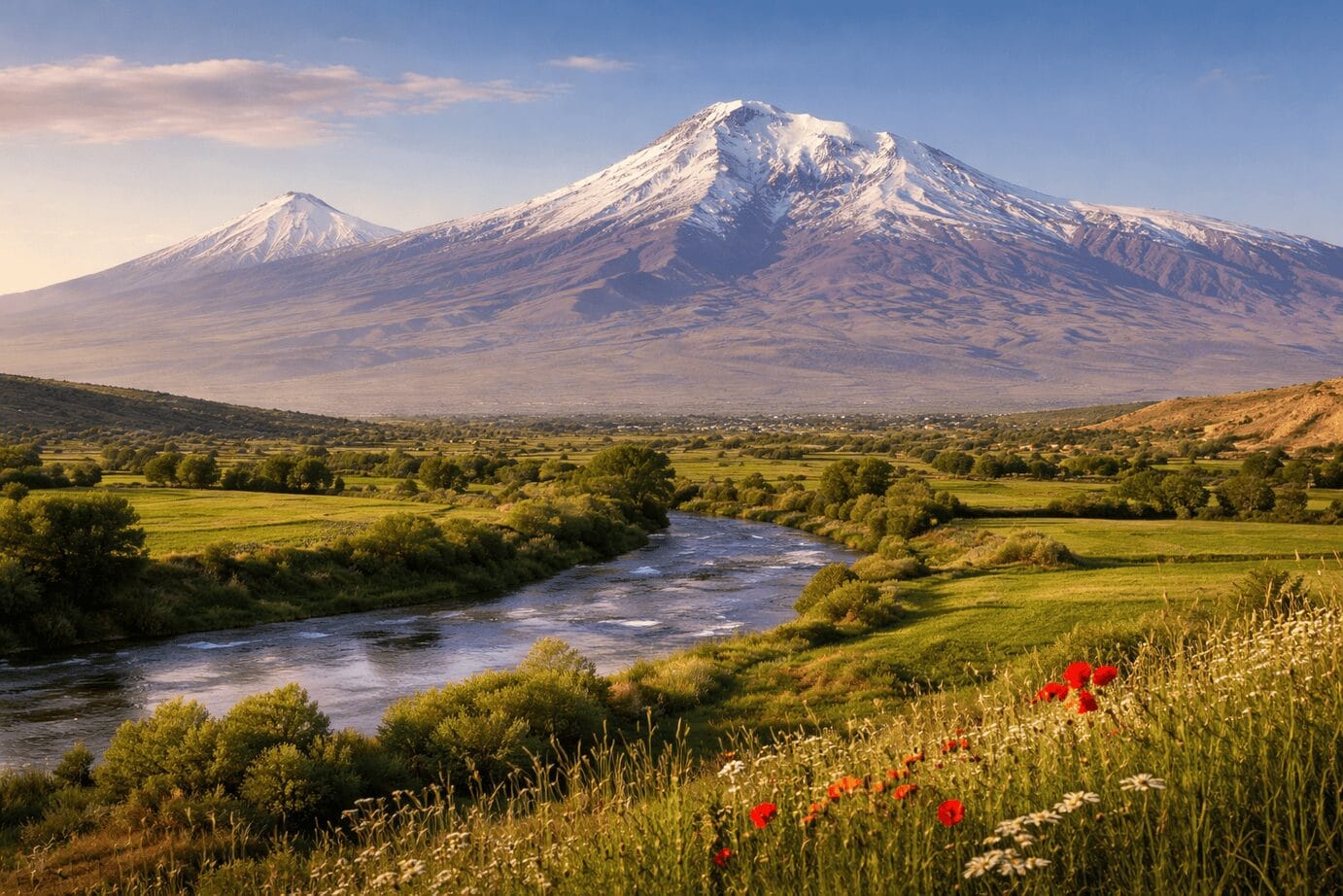
Rising majestically from the Eastern Anatolia plateau, Mount Ararat Turkey stands as one of the world’s most enigmatic and spiritually significant peaks. This dormant volcanic massif has captured human imagination for millennia, appearing in ancient texts, religious scriptures, and countless legends. At 5,137 meters above sea level, it dominates the landscape near Turkey’s borders with Armenia and Iran, creating an unforgettable silhouette against the horizon.
For adventurers, historians, and spiritual seekers alike, Mount Ararat Turkey represents far more than just another mountain to conquer. It embodies a confluence of natural wonder, historical intrigue, and cultural significance that few other places on Earth can match. Whether you’re drawn by the challenge of the climb, the allure of biblical archaeology, or simply the raw beauty of this volcanic giant, understanding what makes this mountain special requires exploring its many dimensions.
The Geography and Geology of a Volcanic Giant
Mount Ararat Turkey consists of two distinct volcanic cones known as Greater Ararat and Lesser Ararat. The taller peak, Greater Ararat, reaches 5,137 meters, making it the highest point in Turkey and one of the most prominent peaks in the Middle East. Lesser Ararat, situated about 13 kilometers to the southeast, stands at 3,896 meters. Together, these twin peaks create a dramatic landscape that has shaped the region’s climate, ecology, and human settlement patterns for thousands of years.
The volcanic complex formed through multiple eruptions over millions of years, with the most recent volcanic activity occurring around 1840. This eruption destroyed the village of Ahora and the Saint James Monastery that had stood on the mountain’s slopes for centuries. Today, the mountain remains classified as dormant rather than extinct, though no significant volcanic activity has been recorded in nearly two centuries.
The slopes of Mount Ararat Turkey feature diverse ecological zones, from fertile agricultural land at lower elevations to alpine meadows, permanent snowfields, and glaciers near the summit. The mountain’s isolation and height create its own weather system, often shrouding the peak in clouds even when surrounding areas enjoy clear skies. This phenomenon contributes to the mountain’s mystical reputation and has fueled countless legends throughout history.
Geologically, the mountain sits at the intersection of several tectonic plates, in a region known for seismic activity. This location has made Mount Ararat Turkey not only a subject of mountaineering interest but also an important site for geological research. Scientists study the mountain to better understand volcanic formation, glacial movement, and the tectonic forces that continue to shape the region.
The Biblical Connection and Noah’s Ark
Perhaps no aspect of Mount Ararat Turkey fascinates people more than its association with the biblical account of Noah’s Ark. According to the Book of Genesis, after the great flood subsided, Noah’s Ark came to rest “on the mountains of Ararat.” While the biblical text uses the plural “mountains,” tradition has specifically identified Mount Ararat Turkey as the final resting place of the Ark.
This connection has sparked countless expeditions over the centuries, with explorers, archaeologists, and amateur treasure hunters seeking physical evidence of the Ark’s existence. Various teams have claimed to find wooden structures, unusual formations, or other anomalies on the mountain’s upper slopes. However, no discovery has been definitively authenticated by the broader scientific community.
The Ark narrative holds special significance across multiple religious traditions. Christianity, Judaism, and Islam all reference the flood story, with the Quran mentioning Mount Judi as the Ark’s landing site, though some Islamic scholars have also associated this with the Ararat region. Armenian Christianity has particularly strong ties to the mountain, with ancient Armenian texts specifically naming Mount Ararat Turkey as the sacred peak where humanity began anew after the flood.
Regardless of one’s stance on the historical accuracy of the Noah’s Ark story, the narrative’s cultural impact on Mount Ararat Turkey cannot be overstated. This biblical association has transformed the mountain from a mere geographical feature into a powerful symbol of divine intervention, human survival, and spiritual renewal. It continues to draw pilgrims and curious travelers from around the world who want to stand on the slopes of this legendary peak.
Cultural Significance Across Civilizations
Beyond its biblical importance, Mount Ararat Turkey holds deep meaning for multiple cultures and peoples. For Armenians, the mountain represents the spiritual heart of their ancestral homeland. Despite being located within modern Turkey’s borders, Mount Ararat appears on Armenia’s coat of arms and remains central to Armenian national identity. Many Armenians refer to it using the name “Masis,” and it features prominently in Armenian literature, art, and folklore.
The mountain’s Turkish name, Ağrı Dağı, translates to “Mountain of Pain” or “Steep Mountain,” reflecting both its challenging terrain and perhaps the complex historical narratives surrounding it. Local Kurdish populations in the region have their own traditions and stories connected to the peak, viewing it as a sacred landmark that has watched over their communities for generations.
Throughout history, Mount Ararat Turkey has served as a navigational landmark for traders traveling the Silk Road and as a strategic observation point for various empires that controlled the region. The mountain witnessed the rise and fall of ancient kingdoms including the Urartians, Persians, Romans, Byzantines, Seljuks, and Ottomans. Each civilization left its mark on the surrounding landscape and contributed to the rich tapestry of stories associated with the peak.
Today, the mountain’s cultural significance extends beyond regional boundaries. It has become an icon of adventure tourism, attracting climbers from every continent who seek to stand atop its summit. For many, reaching the top of Mount Ararat Turkey represents a bucket-list achievement, combining physical challenge with historical and spiritual exploration.
Climbing Mount Ararat: What to Expect
Climbing Mount Ararat Turkey is considered technically straightforward compared to other peaks of similar elevation, but that doesn’t mean it’s easy. The ascent requires no technical mountaineering skills like rock climbing or ice climbing, but climbers must contend with high altitude, unpredictable weather, and the physical demands of a multi-day trek.
Most expeditions to Mount Ararat Turkey follow a standard route that begins from the village of Doğubayazıt, located at approximately 1,950 meters elevation. From there, climbers are transported to a base camp at around 3,200 meters. The typical climb spans four to five days, allowing time for acclimatization, which is important for preventing altitude sickness.
The route proceeds through several camps. After establishing at base camp, climbers move to Camp 1 at approximately 3,700 meters, usually spending a night there to further acclimatize. The next stage reaches Camp 2 at about 4,200 meters. From this high camp, climbers make their summit push, typically starting around midnight or in the early morning hours. This timing allows climbers to reach the summit and descend before afternoon weather deteriorates.
The final push to the summit of Mount Ararat Turkey involves traversing snowfields and navigating around crevasses near the top. While technical equipment like ropes and ice axes aren’t always necessary on the standard route, they’re recommended for safety. The altitude presents the greatest challenge, as the air at 5,137 meters contains significantly less oxygen than at sea level. Many climbers experience headaches, nausea, and fatigue as their bodies struggle to adapt.
Weather conditions on Mount Ararat Turkey can change rapidly. Summer months from July through September offer the most favorable climbing window, with relatively stable weather and minimal snow on the lower slopes. However, even during these months, temperatures at the summit can plunge well below freezing, and strong winds are common. Climbers must come prepared with proper clothing, equipment, and contingency plans.
Permits, Regulations, and Planning Your Expedition
Climbing Mount Ararat Turkey requires advance planning and permits from Turkish authorities. Due to the mountain’s location near sensitive border areas, individual climbers cannot simply show up and start hiking. All climbers must obtain a special permit and are required to join an authorized guided expedition or hire licensed guides.
The permit application process typically takes several weeks, and approval is not guaranteed. Turkish authorities maintain strict control over access to Mount Ararat Turkey for security reasons. The best approach for most international climbers is to book with a reputable Turkish tour operator who handles all permit arrangements, logistics, and provides experienced guides familiar with the mountain.
When selecting a tour operator for Mount Ararat Turkey, research their safety record, guide qualifications, and client reviews. A good operator will provide comprehensive services including airport transfers, accommodation before and after the climb, all meals during the expedition, camping equipment, transportation to trailheads, and experienced mountain guides. They should also have emergency protocols and communication equipment in case of accidents or medical issues.
Physical preparation for climbing Mount Ararat Turkey should begin months before your expedition. While the climb doesn’t require technical skills, good cardiovascular fitness and leg strength are necessary. Training should include regular hiking with a weighted backpack, stair climbing, and aerobic exercise. If you live at low elevation, consider arriving in Turkey several days early to spend time at moderate elevations before beginning your ascent.
The climbing season runs from June through September, with July and August being the busiest months. Early and late season climbs may encounter more snow and colder temperatures but offer fewer crowds. Regardless of when you climb, be prepared for the possibility that weather conditions could prevent a summit attempt. Having an extra day built into your schedule provides flexibility if conditions require waiting.
What to Pack for Your Mount Ararat Adventure
Proper equipment can make the difference between a successful, enjoyable climb and a miserable experience on Mount Ararat Turkey. While your tour operator will typically provide group equipment like tents, cooking gear, and ropes, you’ll need to bring personal items suited for high-altitude mountaineering.
Clothing should follow a layering system. Base layers of moisture-wicking synthetic or merino wool materials keep sweat away from your skin. Insulating mid-layers like fleece or down jackets provide warmth, while a waterproof, windproof outer shell protects against the elements. Don’t forget warm hats, gloves, and extra socks. Many climbers on Mount Ararat Turkey underestimate how cold it gets at altitude, especially during the pre-dawn summit push.
Footwear requires careful consideration. You’ll need sturdy hiking boots with good ankle support for the lower elevations and possibly crampons for the upper mountain if icy conditions exist. Gaiters help keep snow and rocks out of your boots. Break in your boots thoroughly before the trip to prevent blisters during the multi-day trek.
Other essentials for Mount Ararat Turkey include a headlamp with extra batteries, sunglasses and sunscreen for intense high-altitude UV exposure, trekking poles for stability, a comfortable backpack, water bottles or hydration systems, personal medications, and basic first aid supplies. A camera is highly recommended to capture the stunning views, though protect your electronics from extreme cold.
Many climbers also bring high-altitude sleeping bags rated for temperatures well below freezing, though some operators provide these. Energy bars, electrolyte supplements, and favorite snacks can supplement provided meals. While your guides will carry group equipment and some operators offer porter services for personal gear, you should be prepared to carry a daypack with essentials during the climb.
The Best Season and Weather Considerations
Understanding weather patterns is important for anyone planning to climb Mount Ararat Turkey. The mountain creates its own microclimate due to its height and isolation, meaning conditions at the summit often differ dramatically from those in surrounding lowlands.
Summer offers the most reliable weather window. July and August typically provide the most stable conditions, with warmer temperatures and less precipitation. However, even during these months, Mount Ararat Turkey can experience sudden storms, high winds, and dramatic temperature swings. Afternoon thunderstorms are common, which is why summit attempts typically begin in the pre-dawn hours.
June and September mark the shoulder seasons. These months can offer excellent climbing conditions with fewer crowds, but you’re more likely to encounter significant snow on the mountain and more variable weather. Early June may still see winter conditions at higher elevations, while late September can bring the first winter storms of the season.
Winter climbing on Mount Ararat Turkey is possible but significantly more challenging and dangerous. Extreme cold, heavy snowfall, high winds, and avalanche danger make winter ascents suitable only for highly experienced mountaineers with proper equipment and skills. Most tour operators don’t offer winter expeditions, and permit approval becomes even more difficult during these months.
Regardless of season, climbers should monitor weather forecasts carefully in the days leading up to their summit attempt. However, forecasts for Mount Ararat Turkey aren’t always reliable due to the mountain’s tendency to generate its own weather. Experienced guides familiar with local weather patterns provide invaluable insight into current conditions and whether it’s safe to proceed or better to wait.
Temperature ranges vary dramatically by elevation and time of day. Base camp areas might see pleasant temperatures of 15-20°C during summer afternoons, while the summit can be -10°C or colder with wind chill. Night temperatures at high camps regularly drop below freezing even in summer. Being prepared for these extremes ensures you’ll stay safe and comfortable throughout your Mount Ararat Turkey expedition.
Flora, Fauna, and Ecological Zones
The ecological diversity of Mount Ararat Turkey reflects the dramatic elevation changes from the plateau floor to the glaciated summit. Each zone supports different plant and animal communities adapted to specific environmental conditions.
At lower elevations, the surrounding plains and foothills feature semi-arid steppe vegetation. Hardy grasses, scattered shrubs, and drought-resistant plants dominate this zone, where local shepherds graze their flocks during warmer months. Small mammals like rodents and hares are common, while raptors including eagles and hawks hunt across the open landscape.
As elevation increases on Mount Ararat Turkey, the vegetation transitions to alpine meadows bursting with wildflowers during the brief summer growing season. These meadows provide important grazing for domestic animals and support populations of wild ungulates. The flora includes various species of alpine flowers that have adapted to the short growing season, intense sunlight, and cold temperatures.
The fauna of Mount Ararat Turkey includes several notable species. Wild goats navigate the rocky slopes with remarkable agility. Brown bears occasionally roam the lower elevations, particularly during berry season. Wolves, foxes, and smaller carnivores hunt across various elevation zones. Birdwatchers can spot numerous species including snow finches, rock partridges, and various raptors that soar on thermal currents around the mountain.
Above approximately 4,000 meters, vegetation becomes increasingly sparse until finally disappearing altogether. This harsh alpine zone tests the limits of life, with only the most specialized organisms able to survive. Lichens cling to rocks, and occasional mosses find shelter in protected microclimates. The permanent snowfields and glaciers of the upper mountain support virtually no life except for occasional microorganisms.
The ecological zones of Mount Ararat Turkey face increasing pressure from climate change. Glaciers have been retreating measurably over recent decades, and the permanent snowline has risen. These changes affect water availability for communities downstream and alter habitats for the mountain’s wildlife. Understanding and protecting these ecosystems becomes increasingly important as environmental pressures intensify.
Historical Expeditions and Notable Climbers
The history of climbing Mount Ararat Turkey includes centuries of exploration, from religious pilgrims to scientific expeditions and modern adventure seekers. While local shepherds undoubtedly reached the summit in ancient times, the first well-documented ascent came much later.
Friedrich Parrot, a German naturalist, made the first confirmed Western ascent of Mount Ararat Turkey in 1829. His expedition faced numerous challenges including difficult terrain, harsh weather, and local superstitions that considered it sacrilege to climb the sacred mountain. Parrot’s success opened the door for subsequent expeditions, though the mountain remained a serious undertaking requiring substantial resources and determination.
Throughout the 19th and early 20th centuries, various expeditions to Mount Ararat Turkey sought evidence of Noah’s Ark while conducting geographical and geological surveys. James Bryce, a British historian and politician, climbed the mountain in 1876 and claimed to have found a piece of hand-hewn timber at 13,000 feet, which he speculated might be from the Ark. While his claim couldn’t be verified, it renewed interest in the mountain among those fascinated by biblical archaeology.
The 20th century saw numerous expeditions attempting to find the Ark on Mount Ararat Turkey. Some claimed to have seen unusual wooden structures or boat-shaped formations, often in satellite or aerial photographs. However, scientific examination of these claims has consistently failed to provide convincing evidence. Despite this, the search continues to draw explorers who believe the Ark’s remains might still be preserved beneath snow and ice.
Modern mountaineering on Mount Ararat Turkey has become increasingly accessible, with thousands of climbers attempting the summit each year. While the mountain doesn’t attract the same level of attention as peaks like Everest or Kilimanjaro, it maintains a special place in the mountaineering world due to its unique combination of accessibility, cultural significance, and respectable elevation.
Nearby Attractions and Cultural Sites
Climbing Mount Ararat Turkey often serves as the centerpiece of a broader exploration of Eastern Anatolia’s rich historical and cultural landscape. The region surrounding the mountain offers numerous attractions worth visiting before or after your expedition.
The city of Doğubayazıt, the primary gateway for Mount Ararat Turkey expeditions, hosts the stunning Ishak Pasha Palace. This 18th-century palace complex blends Ottoman, Persian, and Armenian architectural styles, perched dramatically on a hillside overlooking the surrounding plain with Mount Ararat Turkey visible in the distance. The palace’s intricate stonework, grand courtyards, and strategic location make it one of Eastern Turkey’s most impressive historical sites.
Near Doğubayazıt, you’ll find the Meteor Crater, a circular geological formation that locals claim resulted from a meteorite impact. While its exact origins remain debated, the site offers an interesting geological curiosity and panoramic views of the surrounding landscape including Mount Ararat Turkey.
Lake Van, located about 150 kilometers from Mount Ararat Turkey, is Turkey’s largest lake and offers beautiful scenery, historical sites, and the famous Van cats with their distinctive mismatched eyes. The Armenian church on Akdamar Island, accessible by boat from the lake’s shore, features stunning medieval stone carvings depicting biblical scenes.
The ancient city of Ani, now a UNESCO World Heritage Site, sits near the Armenian border and contains the ruins of a once-great medieval Armenian capital. Walking among the abandoned churches, mosques, and fortifications, you gain insight into the region’s complex history. On clear days, Mount Ararat Turkey is visible from Ani, completing the connection between historical and natural wonders.
For those interested in Kurdish culture, the region around Mount Ararat Turkey provides opportunities to experience traditional villages, sample local cuisine, and observe pastoral lifestyles that have changed little over centuries. The warm hospitality of local people adds a human dimension to the landscape’s natural and historical attractions.
Practical Information for Visitors
Planning a trip to climb Mount Ararat Turkey requires attention to practical details beyond just physical preparation. Understanding visa requirements, transportation options, and local customs will help ensure a smooth experience.
Most international visitors need a visa to enter Turkey. Many nationalities can obtain an e-visa online before traveling, a straightforward process that takes just a few minutes. Check current requirements for your specific nationality, as regulations change periodically. Your passport should be valid for at least six months beyond your planned departure date.
International flights typically arrive in Istanbul, Turkey’s main gateway. From Istanbul, domestic flights connect to Ağrı or Van, the nearest airports to Mount Ararat Turkey. Alternatively, some travelers fly into Erzurum, which offers more frequent flights but requires a longer ground transfer. Your tour operator usually arranges transportation from these airports to Doğubayazıt.
The currency in Turkey is the Turkish Lira. While credit cards are accepted in cities, cash remains essential for smaller towns and rural areas near Mount Ararat Turkey. ATMs are available in Doğubayazıt and larger towns, but carrying some cash from the airport is advisable. Small denomination bills are useful for tips and minor purchases.
Language can present challenges, as English proficiency is limited in Eastern Turkey. Learning a few basic Turkish phrases shows respect and helps with simple interactions. Your guides will typically speak English and serve as translators when needed. Translation apps on your phone can bridge communication gaps, though cell service becomes unreliable in remote areas around Mount Ararat Turkey.
Health insurance with coverage for high-altitude trekking is strongly recommended. Standard travel insurance often excludes mountaineering activities, so verify your policy covers climbing to 5,000+ meters. Consider evacuation insurance, as medical facilities near Mount Ararat Turkey are basic, and serious emergencies might require evacuation to Ankara or Istanbul.
Safety Considerations and Altitude Sickness
Safety should be the top priority for anyone climbing Mount Ararat Turkey. While the standard route doesn’t involve technical climbing, the mountain presents real hazards that require respect and preparation.
Altitude sickness, or acute mountain sickness (AMS), poses the most common threat. As you ascend Mount Ararat Turkey, decreasing oxygen levels can cause symptoms including headache, nausea, dizziness, and fatigue. Most people experience mild symptoms that resolve with acclimatization. However, severe altitude sickness can progress to life-threatening conditions like high-altitude pulmonary edema or cerebral edema.
Preventing altitude sickness starts with proper acclimatization. Multi-day expeditions that gradually increase sleeping elevation help your body adapt. Staying well-hydrated, avoiding alcohol, and listening to your body are important. If symptoms worsen rather than improve, the only effective treatment is descent. Never ignore serious altitude sickness symptoms, and always inform your guides how you’re feeling.
Weather-related hazards on Mount Ararat Turkey include hypothermia from cold and wet conditions, lightning during storms, and frostbite on exposed skin during summit day. Proper clothing, staying dry, and being willing to turn back if conditions deteriorate are key to managing these risks.
The remote location of Mount Ararat Turkey means that rescue and medical help can take hours or even days to reach you in an emergency. Your tour operator should have emergency protocols, satellite communication equipment, and evacuation plans. Understanding these procedures before beginning your climb provides peace of mind.
Political and security considerations also factor into climbing Mount Ararat Turkey. The mountain sits near sensitive borders, and regional tensions occasionally result in access restrictions. Check current travel advisories for Eastern Turkey and follow your tour operator’s guidance regarding security matters.
The Future of Mount Ararat Tourism
Tourism on Mount Ararat Turkey continues to grow as more adventure travelers discover this remarkable peak. This growth brings both opportunities and challenges for the region and the mountain itself.
Increased tourism provides economic benefits to local communities around Mount Ararat Turkey. Guide services, accommodation, food suppliers, and transportation providers all benefit from climbing season revenues. This economic activity can help support rural communities and provide alternatives to traditional livelihoods that may be threatened by environmental and economic changes.
However, growing visitor numbers also raise environmental concerns. Waste management on the mountain requires careful attention, as improper disposal of trash at high camps degrades the pristine environment. Responsible tour operators enforce “leave no trace” principles, packing out all waste and teaching climbers to minimize their impact. As tourism grows, maintaining these standards becomes increasingly important.
Climate change poses perhaps the greatest long-term challenge for Mount Ararat Turkey. Retreating glaciers and changing weather patterns affect climbing conditions, water resources for downstream communities, and the mountain’s ecosystems. Some scientists predict that the mountain’s permanent snowfields could disappear within decades if current warming trends continue.
Political developments also shape the future of tourism on Mount Ararat Turkey. Improved regional stability and infrastructure development could make access easier and safer, potentially attracting more visitors. Conversely, geopolitical tensions could restrict access or deter potential climbers concerned about security.
Sustainable tourism development will determine whether Mount Ararat Turkey can accommodate growing interest while preserving its natural environment and cultural significance. This requires cooperation among tour operators, government authorities, local communities, and visitors themselves. Each stakeholder has a role in ensuring that future generations can experience the same awe and wonder that Mount Ararat Turkey has inspired for millennia.
Conclusion: A Mountain Like No Other
Mount Ararat Turkey occupies a unique place in the world’s geography, history, and imagination. Few mountains combine such accessible climbing with such profound historical and cultural significance. Whether you’re drawn by the physical challenge, the biblical connection, the stunning landscapes, or simply the desire to stand atop this legendary peak, Mount Ararat Turkey delivers an experience that transcends ordinary mountain climbing.
Preparing properly for your expedition, respecting local customs and regulations, and approaching the mountain with appropriate humility regarding its hazards will help ensure your adventure is safe and rewarding. The memories of standing on that windswept summit, looking out over three countries and thousands of years of human history, will stay with you long after you’ve descended.
As you plan your journey to Mount Ararat Turkey, remember that you’re joining a long tradition of explorers, pilgrims, and adventurers who have been drawn to this mountain throughout history. Treat the mountain, the environment, and the local people with respect, and you’ll find that Mount Ararat Turkey offers rewards far beyond the satisfaction of reaching another summit. It provides a connection to something larger—whether you interpret that as nature, history, spirituality, or simply the shared human desire to stand atop the high places of the Earth and see what lies beyond.
More from The Daily Mesh:
- The AI Classroom: How Teachers Are Adapting to ChatGPT and the New Digital Frontier
- Esports in Schools: The New Varsity Sport?
- How Millennials and Gen Z Are Redefining Work-Life Balance