


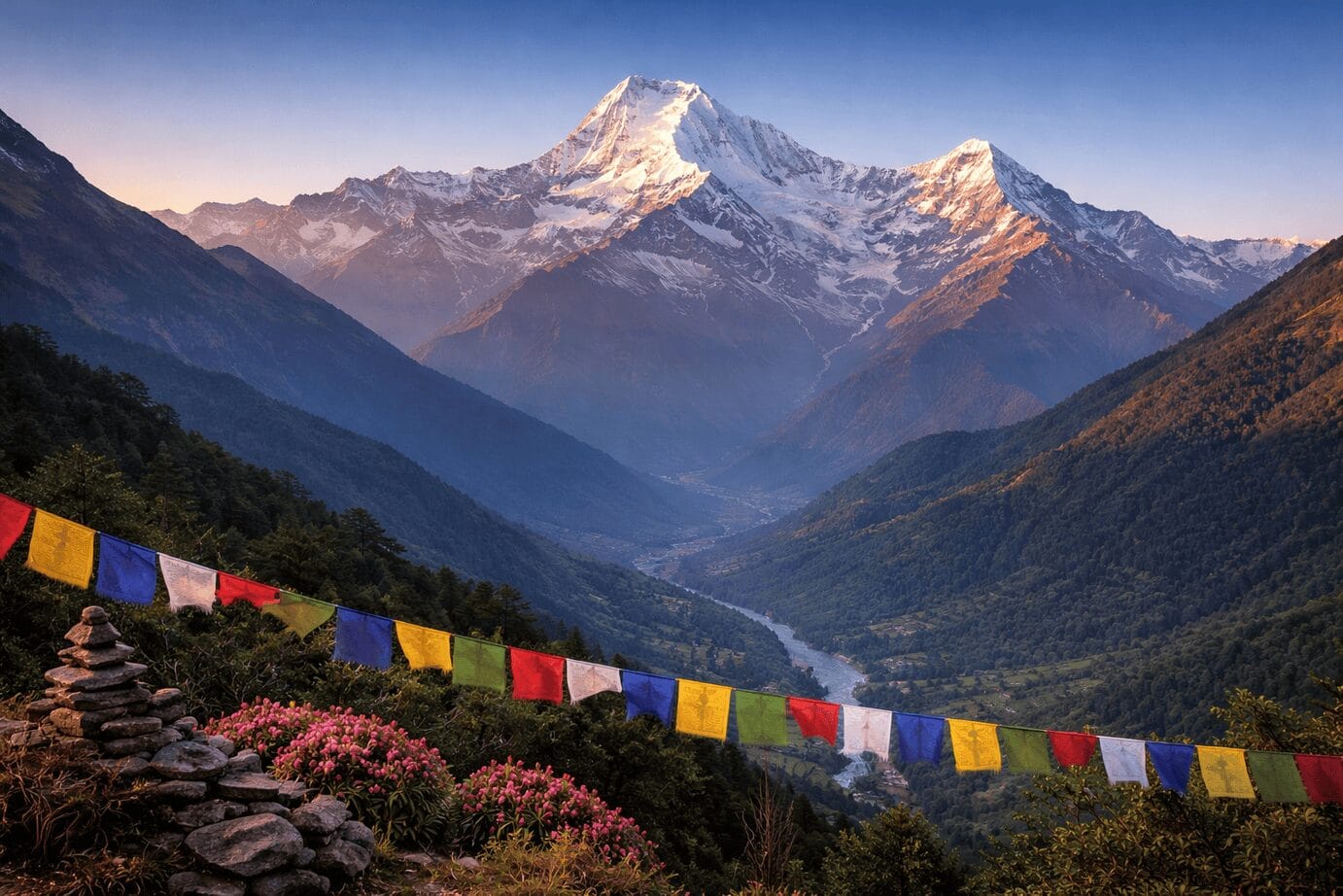
The morning sun breaks over the Himalayan range, casting golden light across jagged peaks that pierce the sky at impossible heights. Among these giants stands a mountain so beautiful and so deadly that seasoned mountaineers whisper its name with equal parts reverence and dread. Mount Annapurna Nepal claims the lives of climbers at a rate that makes Everest look almost forgiving by comparison.
Standing at 8,091 meters (26,545 feet), Mount Annapurna Nepal holds the grim distinction of being the world’s tenth-highest mountain and statistically the most dangerous eight-thousander to climb. While Everest captures headlines and Instagram posts, Annapurna quietly maintains a death rate hovering around 32 percent. That means nearly one in three climbers who attempt to reach its summit never make it back down alive.
The Mountain That Showed Humanity What Was Possible
Mount Annapurna Nepal entered mountaineering history on June 3, 1950, when French climbers Maurice Herzog and Louis Lachenal became the first humans to summit an eight-thousander. This achievement predated the first Everest summit by three years, marking a pivotal moment in high-altitude climbing. The expedition, however, came at a brutal cost. Herzog lost all his fingers and toes to frostbite, enduring dozens of surgeries throughout his life as a permanent reminder of his achievement.
The mountain’s name derives from Sanskrit, meaning “Goddess of the Harvests” or “Provider of Food.” Local communities in the region view Mount Annapurna Nepal as a sacred entity, a provider of life-giving water through its glaciers that feed the rivers sustaining the valleys below. This reverence stands in stark contrast to the mountain’s deadly reputation among those who attempt to scale its treacherous slopes.
Why Mount Annapurna Nepal Is the Deadliest Peak
Several factors converge to make Mount Annapurna Nepal the most lethal mountain in the world. Unlike Everest, which has well-established routes and a thriving commercial climbing industry, Annapurna remains wild, unpredictable, and resistant to human conquest.
The mountain’s avalanche danger exceeds that of any other peak in the Himalayas. Its steep faces and unstable snowfields create conditions where massive walls of snow and ice can break loose with minimal warning. The south face, in particular, presents a near-vertical wall of ice and rock that has claimed numerous lives over the decades. Weather systems moving through the region deposit enormous amounts of snow on these slopes, building layer upon layer of potential avalanche triggers.
Objective hazards plague every route on Mount Annapurna Nepal. Seracs, those massive towers of glacial ice, loom over climbing paths like frozen guillotines. They can collapse without warning, crushing or burying climbers beneath tons of ice. Crevasses split the glaciers, some hidden beneath deceptive snow bridges that can give way under a climber’s weight, plunging them into icy voids.
The technical difficulty of the climbing itself separates casual mountaineers from those with the skill set required to attempt Mount Annapurna Nepal. Sustained sections of steep ice climbing, mixed rock and ice passages, and exposure to thousand-meter drops demand absolute mastery of climbing techniques. A single mistake, a moment of exhaustion, or a brief lapse in judgment can prove fatal.
Weather on the mountain changes with frightening speed. Clear skies can transform into whiteout conditions within minutes, stranding climbers in the death zone with dwindling oxygen supplies and plummeting temperatures. Wind speeds regularly exceed 100 kilometers per hour, generating wind chill values that can freeze exposed skin in seconds.
The Routes That Test Human Limits
Climbers attempting Mount Annapurna Nepal typically choose between several established routes, each presenting unique challenges and dangers. The north face route, considered the “normal” approach, still demands exceptional skill and carries substantial risk. This route follows a series of camps up the mountain’s northwestern flanks, crossing avalanche-prone slopes and navigating through the treacherous icefall sections.
The south face of Mount Annapurna Nepal represents one of mountaineering’s ultimate challenges. First climbed by Chris Bonington’s expedition in 1970, this 3,000-meter wall of ice and rock has defeated some of the world’s best climbers. The constant threat of rockfall and ice avalanches, combined with sustained technical climbing at extreme altitude, makes the south face a route attempted only by elite mountaineers willing to accept extraordinary risk.
More recent route variations have emerged as climbers search for safer passage up Mount Annapurna Nepal, but the mountain refuses to yield easy paths. Each new route brings fresh dangers, and the death toll continues to climb alongside the number of summit attempts.
Life in the Shadow of the Giant
The Annapurna Conservation Area, established in 1986, encompasses Mount Annapurna Nepal and the surrounding region, covering 7,629 square kilometers of diverse landscapes. This protected area supports approximately 120,000 residents across several ethnic communities, including Gurung, Thakali, and Manangba people who have lived in these mountains for generations.
These communities have built their lives and cultures around Mount Annapurna Nepal and its sister peaks. Traditional villages cling to hillsides, terraced fields climb toward the snowline, and ancient trade routes connect remote valleys. The mountain provides water, moderates local climate patterns, and serves as a spiritual anchor for communities that see the divine in its towering presence.
Tourism has transformed the regional economy over recent decades. While only a few hundred climbers attempt to summit Mount Annapurna Nepal, hundreds of thousands of trekkers walk the famous Annapurna Circuit and trek to Annapurna Base Camp each year. These treks offer spectacular mountain views without the extreme dangers of high-altitude climbing, supporting lodges, guide services, and local businesses throughout the region.
The relationship between local communities and Mount Annapurna Nepal reflects a balance between economic opportunity and cultural preservation. Many young people from the region work as porters, guides, and lodge owners, earning crucial income from mountain tourism while maintaining connections to traditional ways of life.
The Deadliest Climbing Season in Recent Memory
The year 2014 brought renewed attention to the dangers of Mount Annapurna Nepal when a series of tragedies unfolded on the mountain’s slopes. On October 14, a massive blizzard struck the Annapurna Circuit, killing 43 people, including trekkers and guides. This disaster, one of Nepal’s deadliest mountain catastrophes, highlighted how quickly conditions can deteriorate even on trekking routes far below the summit.
The spring climbing season of 2014 also saw multiple deaths on the mountain itself, reinforcing its reputation as the most dangerous peak in the world. Experienced climbers, many with previous eight-thousander summits, perished in avalanches and falls, reminding the mountaineering community that no amount of experience guarantees survival on Mount Annapurna Nepal.
Why Climbers Keep Coming Back
Given the horrific statistics and well-documented dangers, an obvious question emerges: why do climbers continue attempting Mount Annapurna Nepal? The answers reveal much about human nature, the psychology of extreme risk-taking, and the profound draw of high mountains.
For elite mountaineers, completing the fourteen eight-thousanders represents the ultimate achievement in high-altitude climbing. Mount Annapurna Nepal stands as one of the most challenging items on this list, and those pursuing this goal must eventually face the mountain’s dangers. The desire to join the exclusive club of climbers who have summited all fourteen peaks drives some to accept risks they might otherwise avoid.
The historical significance of Mount Annapurna Nepal as the first eight-thousander climbed adds to its allure. Standing where Herzog and Lachenal stood, succeeding where dozens have failed, connects modern climbers to mountaineering’s golden age. This link to history, to the pioneering spirit of early Himalayan exploration, exerts a powerful psychological pull.
Some climbers are drawn specifically to the technical challenges that Mount Annapurna Nepal presents. These individuals seek not just altitude but difficult climbing, sustained exposure, and routes that test the absolute limits of their skills. For them, an easier mountain holds less appeal than a harder one, regardless of increased danger.
The mountain’s aesthetic beauty cannot be discounted. Mount Annapurna Nepal rises in a stunning massif, its ridges and faces presenting some of the most photogenic terrain in the Himalayas. The desire to experience this beauty firsthand, to stand in places few humans have ever reached, motivates climbers to accept extraordinary risk.
Modern Climbing and Technology
Advances in climbing equipment, weather forecasting, and communication technology have made Mount Annapurna Nepal marginally safer than in decades past, though the mountain remains extraordinarily dangerous. Modern climbers use satellite phones to receive detailed weather forecasts, allowing them to time summit pushes for optimal conditions. Improved clothing and sleeping systems provide better protection against extreme cold, reducing frostbite risk.
Despite these technological improvements, Mount Annapurna Nepal continues to claim lives at an alarming rate. Technology cannot eliminate avalanches, prevent seracs from collapsing, or stop storms from trapping climbers in the death zone. The mountain’s fundamental dangers remain unchanged, and the death rate has declined only marginally even as equipment and techniques have improved.
Some mountaineering experts argue that technology may actually increase risk on Mount Annapurna Nepal by encouraging less-experienced climbers to attempt the peak. The false confidence provided by satellite phones, GPS devices, and modern equipment can lead climbers to underestimate the mountain’s dangers or overestimate their own abilities.
Conservation and Environmental Challenges
Climate change impacts Mount Annapurna Nepal in ways that increase climbing dangers while threatening the communities dependent on the mountain’s glaciers. Rising temperatures destabilize ice formations, increasing serac collapse frequency and making avalanche prediction even more difficult. Glacial retreat exposes new crevasse fields and alters established routes, forcing climbers to navigate unfamiliar terrain.
The Annapurna Conservation Area faces growing environmental pressures from increased tourism, even as conservation efforts attempt to protect the region’s ecosystems. Waste management remains a significant challenge, particularly at base camps and along trekking routes. Organizations work to remove accumulated garbage and human waste, but the volume of visitors continues to strain these systems.
Water resources fed by Mount Annapurna Nepal glaciers face uncertain futures as climate patterns shift. Communities downstream depend on glacial meltwater for agriculture, drinking water, and hydroelectric power. Accelerated glacial retreat threatens these water supplies, potentially forcing population relocations and economic disruption in the coming decades.
The Ethics of Extreme Risk
The high death rate on Mount Annapurna Nepal raises ethical questions about personal risk-taking, rescue obligations, and the responsibilities of governments permitting these expeditions. Nepal issues climbing permits for the mountain, generating revenue while accepting that a significant percentage of permit holders will die attempting the summit.
Rescue operations on Mount Annapurna Nepal present extraordinary challenges and dangers. Helicopter evacuations become impossible above certain altitudes due to thin air, forcing rescue teams to climb into danger zones to retrieve injured or deceased climbers. These rescuers risk their own lives, often for clients who knowingly accepted extreme danger in pursuit of personal goals.
The impact on families and communities when climbers die on Mount Annapurna Nepal extends far beyond the individuals involved. Sherpas and high-altitude workers supporting expeditions face tremendous risks, often for relatively modest compensation. When these individuals die, their families lose primary breadwinners, and entire communities feel the loss.
Preparing for the Ultimate Challenge
Climbers preparing to attempt Mount Annapurna Nepal typically spend years building the necessary skills and experience. Most successful summiteers have previously climbed multiple seven-thousanders and several other eight-thousanders before attempting Annapurna. The mountain demands absolute competence in technical ice climbing, high-altitude physiology management, and expedition logistics.
Physical preparation for Mount Annapurna Nepal extends beyond simple fitness. Climbers must develop cardiovascular systems capable of functioning at extreme altitude, where oxygen levels drop to roughly one-third of sea level concentrations. Mental preparation proves equally crucial, as climbers must remain calm and make sound decisions while exhausted, oxygen-deprived, and facing life-threatening situations.
Financial requirements for an Mount Annapurna Nepal expedition run between $40,000 and $100,000, depending on expedition style and support levels. These costs cover permits, logistics, equipment, insurance, and support staff. The financial investment adds pressure to summit, potentially influencing decision-making in dangerous situations when retreat would be the wiser choice.
The Future of Climbing on Annapurna
The future of climbing on Mount Annapurna Nepal remains uncertain as multiple factors converge to reshape high-altitude mountaineering. Climate change continues altering the mountain’s physical structure, potentially making it even more dangerous than its already horrific statistics suggest. Increased commercialization of eight-thousander climbing brings more clients to these peaks, including some who lack the experience for such extreme challenges.
Regulatory changes may eventually restrict access to Mount Annapurna Nepal, particularly if death rates continue at current levels. Nepal’s government faces pressure to balance tourism revenue against criticism of permitting climbs on such a deadly mountain. Stricter qualification requirements for permits could reduce deaths while also reducing the number of attempts.
The mountaineering community continues debating whether Mount Annapurna Nepal should remain open to commercial expeditions or be reserved for elite climbers with proven track records. No consensus has emerged, and the mountain remains accessible to anyone willing to pay for a permit and organize an expedition.
Conclusion
Mount Annapurna Nepal stands as a monument to both human ambition and human mortality. Its summit represents one of mountaineering’s greatest achievements and one of its deadliest objectives. The mountain has taught generations of climbers that nature ultimately sets the terms, that no amount of technology or determination can eliminate the fundamental dangers of extreme altitude and hostile terrain.
For those who choose to climb Mount Annapurna Nepal, the decision represents a conscious acceptance of significant death risk in pursuit of a goal that holds deep personal meaning. Whether this choice reflects admirable courage or reckless hubris depends largely on individual perspective. What remains undeniable is that the mountain will continue claiming lives, and climbers will continue attempting its summit despite the horrific odds.
The local communities living in the shadow of Mount Annapurna Nepal offer perhaps the wisest perspective. They see the mountain not as a challenge to be conquered but as a presence to be respected, a source of life that demands reverence rather than assault. As climate change and increasing tourism pressure transform the Himalayas, this perspective may become increasingly relevant, reminding us that some mountains are better appreciated from a distance than from their deadly summits.
Mount Annapurna Nepal will outlast all who attempt to climb it. The mountain existed long before humans arrived in the Himalayas, and it will remain long after the last climber has made their attempt. Whether that final climber returns alive or joins the dozens who remain on the mountain’s slopes, frozen in their final resting places, only the mountain itself can know.
More from The Daily Mesh:
- Gen Z Voting Engagement: Trends in Political Engagement
- Nintendo Switch 2: Everything You Need to Know About the 2025 Console Revolution
- Are You a Toxic Parent? 15 Signs You Might Be—and How to Change