


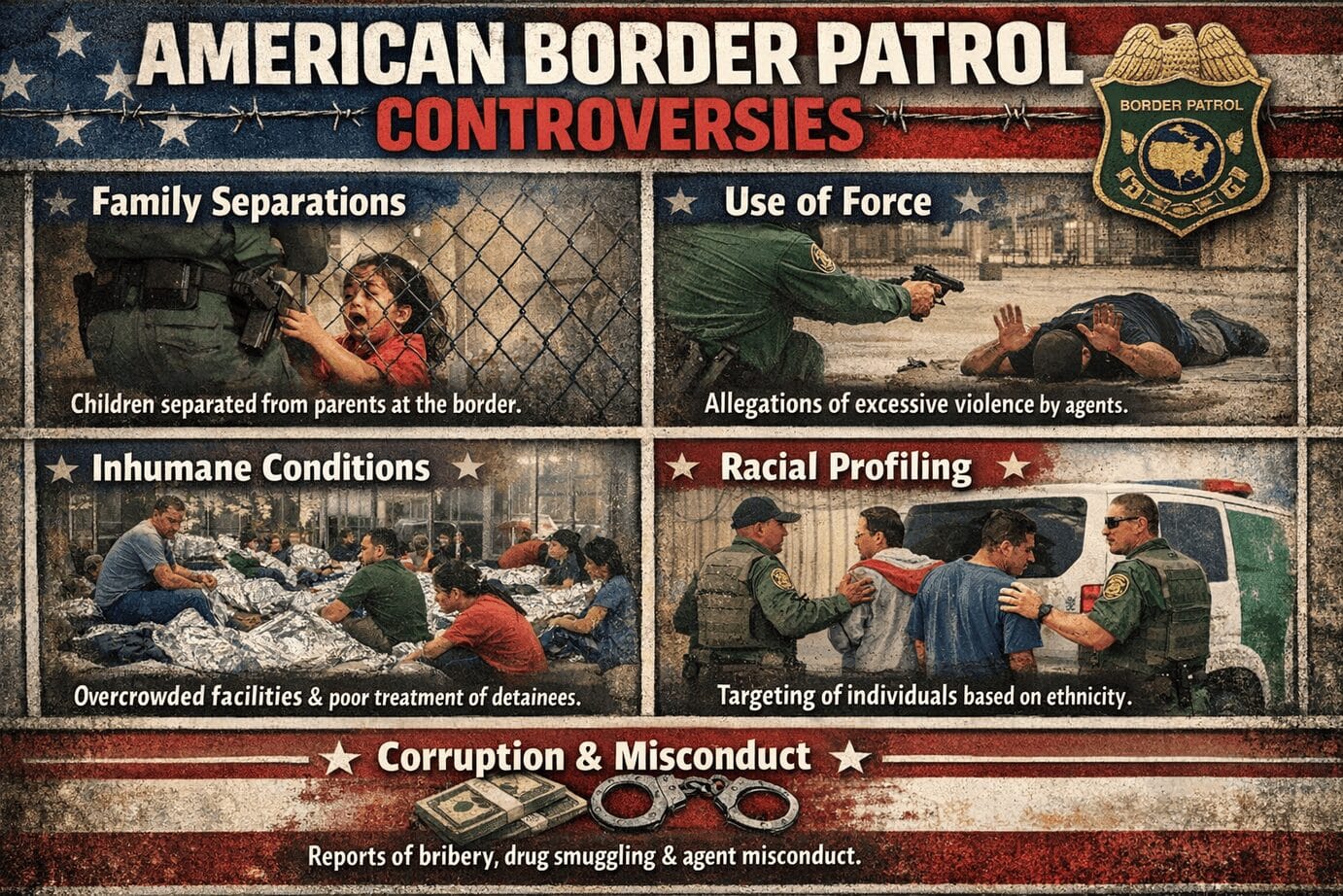
Gregory Kent Bovino has emerged as one of the most controversial figures in American immigration enforcement, becoming the public face of the Trump administration’s aggressive deportation operations across major U.S. cities. As a Border Patrol commander who rose from relative obscurity to national prominence, Greg Bovino Border Patrol operations have sparked intense debate about immigration policy, federal law enforcement tactics, and the boundaries of executive authority.
Early Life and Path to Border Patrol
Born on March 27, 1970, in San Bernardino County, California, Gregory Bovino came from an Italian American family with deep immigrant roots. His great-grandparents emigrated from Calabria to Pennsylvania in 1909, becoming naturalized citizens in 1927. The family later moved to Blowing Rock, North Carolina, when Bovino was just two years old.
Bovino’s childhood was marked by tragedy and hardship. In 1981, his father Michael drunkenly crashed his truck into a woman’s car, killing her. Michael Bovino pleaded guilty to death by motor vehicle and served four months in prison. The incident forced the family to sell their bar, leading to financial struggles and eventually divorce.
Despite these challenges, Bovino excelled academically. He graduated from Watauga High School in 1988 and attended Western Carolina University, where he appeared on the dean’s list in 1991. That same year, he began the Leader Development and Assessment Course at Fort Lewis. After graduating from Western Carolina in 1993, Bovino pursued graduate studies at Appalachian State University.
The seeds of Bovino’s Border Patrol career were planted in childhood. He watched the 1982 film “The Border,” starring Jack Nicholson and Harvey Keitel, which portrayed Border Patrol agents as corrupt. Produced by a distant cousin of his mother, the film left young Bovino crestfallen. He later said he was moved to join the Border Patrol in 1996 to show he could be the opposite of those fictional agents.
Career Progression in Border Patrol
After graduating from Appalachian State University, Bovino briefly joined the Boone Police Department before entering the U.S. Border Patrol in 1996 as a member of Class 325 at the Border Patrol Academy. He was initially assigned to the Border Patrol’s sector in El Paso, Texas, where he worked as the acting field operations supervisor in the tactical unit.
In 2004, Bovino transferred to the sector in Yuma, Arizona. By December 2008, he had risen to assistant chief at the Yuma sector’s headquarters. That same month, he was promoted to patrol agent in charge of the station in Blythe, California.
An early controversy emerged in 2010 when Bovino led an operation intended to last three days, raiding airport and bus stations in Las Vegas. The plan was halted after just one hour amid criticism from Nevada Senator Harry Reid, foreshadowing the contentious relationship between Greg Bovino Border Patrol operations and elected officials.
By August 2019, Bovino had become chief of the Border Patrol’s sector in New Orleans. In March 2021, he was named chief of the sector in El Centro, California, a position he held until August 2023. During his tenure in El Centro, Bovino cultivated a more public persona, once inviting reporters to watch him breaststroke across a concrete irrigation canal to demonstrate the dangers migrants faced.
Rise as Commander At Large
The second presidency of Donald Trump transformed Greg Bovino from a regional Border Patrol chief into a national figure. In June 2025, he was named the tactical commander of a mass raid operation in Los Angeles that triggered protests across the city. The operation marked the beginning of Bovino’s high-profile role in implementing the administration’s immigration policy.
By September 2025, Bovino was reassigned to command Operation Midway Blitz, a sweeping Immigration and Customs Enforcement operation in Chicago. It was here that Greg Bovino Border Patrol tactics drew intense scrutiny and criticism. His operations in Chicago included staging a raid on an apartment building using a Black Hawk helicopter and using chemical irritants on protesters.
In October 2025, Homeland Security Secretary Kristi Noem dubbed Bovino a “commander at large” of the Border Patrol in an op-ed, a rank with no statutory basis. The position placed him outside the Border Patrol’s normal command structure, reporting directly to Noem. He was involved in reorganization efforts at ICE alongside Corey Lewandowski, Trump’s former campaign manager who advised Noem.
Bovino’s public persona became increasingly flamboyant during this period. Former Border Patrol senior agent Jenn Budd called him “the Liberace of the Border Patrol” for his theatrical behavior and use of camera crews riding along on raids. His social media presence grew, including a controversial post in November 2025 where he posed in front of Chicago’s iconic Bean sculpture, writing: “Proud to report there were no illegal aliens in the park this morning. Readers should’ve BEAN there, ha ha.”
Controversial Tactics and Legal Challenges
The aggressive tactics employed by Greg Bovino Border Patrol units led to multiple legal confrontations. In Chicago, he was recorded throwing a tear gas canister at a mass of protesters. Plaintiffs in a lawsuit alleged that Bovino violated a court order preventing federal immigration agents from using tear gas.
U.S. District Judge Sara L. Ellis admonished Bovino and ordered him to report on the Border Patrol’s use of force daily. The judge later found that Bovino had not been hit in the head with a rock before deploying tear gas, despite Department of Homeland Security assertions to the contrary. The reporting order was temporarily paused by an appeals court.
In California’s Central Valley, near the end of Joe Biden’s presidency, Bovino led operations that resulted in dozens of arrests in Kern County. The tactics employed in what was referred to as Operation Return to Sender were later ruled illegal by a federal judge.
In July 2025, acting U.S. attorney Michele Beckwith told Bovino to follow a court order regarding immigration enforcement. She was subsequently dismissed from her position.
The controversial nature of Greg Bovino Border Patrol operations even prompted alleged threats against his life. A Chicago man was accused of soliciting someone to kill Bovino, though he was ultimately acquitted of putting a bounty on the Border Patrol commander in January 2026.
Minneapolis Operations and Fatal Shootings
The controversies surrounding Greg Bovino Border Patrol leadership reached a critical point in Minneapolis, Minnesota, where federal immigration enforcement operations led to two fatal shootings of American citizens within three weeks.
On January 7, 2026, Immigration and Customs Enforcement officer Jonathan Ross fatally shot 37-year-old Renée Nicole Good, a U.S. citizen and mother. Federal officials initially claimed Good had run over Ross with her vehicle, but video evidence contradicted this narrative. Good’s death sparked national protests and intensified scrutiny of federal immigration tactics.
The situation escalated dramatically on January 24, 2026, when Border Patrol agents under Bovino’s command fatally shot Alex Jeffrey Pretti, a 37-year-old intensive care nurse at a Veterans Affairs facility. Multiple videos showed Pretti filming federal agents with his phone and attempting to help a woman who had been pushed to the ground by an officer.
According to the Department of Homeland Security, Pretti “approached U.S. Border Patrol officers with a 9mm semi-automatic handgun” and “violently resisted” attempts to disarm him. However, bystander videos verified by major news organizations appeared to contradict key elements of this account. The videos showed Pretti with his phone, not a gun, in the moments before the confrontation. An officer was seen removing Pretti’s holstered firearm approximately one second before another officer opened fire.
Bovino’s response to the shooting drew fierce criticism. He claimed “the victims are the Border Patrol agents” and refused to identify the agent who shot Pretti. At a news conference, Bovino asserted that Pretti had possessed multiple magazines with intent to inflict harm on officers, calling it a potential “massacre.” California Governor Gavin Newsom condemned Bovino’s defense of the shooting, referring to him as “Gestapo Greg” and calling his statements “absolutely unacceptable.”
Minneapolis Police Chief Brian O’Hara confirmed that Pretti was a lawful gun owner with a Minnesota state permit to carry and had no criminal record aside from traffic tickets. Pretti’s parents released a statement calling the federal officials’ account “sickening and reprehensible.”
Political Fallout and Demotion
The fatal shooting of Alex Pretti triggered immediate political consequences for Greg Bovino Border Patrol operations. President Donald Trump, who had previously supported aggressive immigration enforcement, reportedly grew increasingly concerned about the optics of the Minneapolis crackdown.
On January 26, 2026, just two days after Pretti’s death, The Atlantic reported that Bovino had been removed from his commander-at-large position and would return to his former role as a border official in El Centro, California, where he was expected to retire soon. Multiple sources confirmed to ABC News that Bovino was being reassigned to resume duties as chief of the El Centro sector, a move widely described as a demotion.
The Trump administration initially disputed reports of Bovino’s removal. Department of Homeland Security spokesperson Tricia McLaughlin stated, “Chief Gregory Bovino has NOT been relieved of his duties,” calling him “a key part of the President’s team and a great American.” White House press secretary Karoline Leavitt similarly defended Bovino as “a wonderful man” and “a great professional.”
However, these statements did not address whether Bovino would remain in his commander-at-large role. President Trump announced he was dispatching Border Czar Tom Homan to Minnesota, bypassing the normal chain of command that included both Homeland Security Secretary Kristi Noem and Bovino. Bovino was expected to leave Minneapolis as early as January 27, 2026.
The reassignment came amid broader scrutiny of the administration’s immigration enforcement tactics. Minnesota Governor Tim Walz and Minneapolis Mayor Jacob Frey had repeatedly called for federal agents to withdraw from the state. Both officials were reportedly under federal investigation for their public criticism of immigration enforcement operations, which they characterized as politically motivated.
Impact on Immigration Policy Debate
The rise and fall of Greg Bovino Border Patrol operations illuminates fundamental tensions in American immigration enforcement. His aggressive, militarized approach to deportations represented a significant escalation from traditional Border Patrol activities, which historically focused on border security rather than interior enforcement in major cities.
Bovino’s tactics drew comparisons to military operations, with the use of helicopters, tactical units, chemical irritants, and large-scale coordinated raids. Critics argued these methods were excessive and dangerous, particularly when deployed in densely populated urban areas. Supporters contended they were necessary to enforce immigration law against sanctuary jurisdictions that refused to cooperate with federal authorities.
The fatal shootings in Minneapolis raised profound questions about the rules of engagement for federal immigration officers and the level of force appropriate for civil immigration enforcement. Unlike criminal law enforcement officers who receive extensive training in de-escalation and use of force, Border Patrol agents have traditionally focused on border interdiction rather than confrontational situations with American citizens exercising their constitutional rights.
Former Border Patrol senior agent Jenn Budd, who became a whistleblower and critic of the agency, described systemic problems with recruitment standards, inadequate vetting, and routine excessive force. She characterized the culture as one that dehumanizes migrants and immigrants, referring to detained individuals with derogatory terms.
The controversy also highlighted the constitutional issues raised when federal law enforcement operates in defiance of state and local authorities. The clashes between Greg Bovino Border Patrol forces and elected officials in cities like Chicago, Los Angeles, and Minneapolis represented a broader struggle over federalism and the limits of executive power.
Media Presence and Public Perception
Unlike most Border Patrol officials, Bovino actively cultivated a media presence during his time as commander-at-large. He frequently appeared in cable news interviews, gave press conferences, and maintained an active social media profile. This visibility made him the most recognizable face of the Trump administration’s immigration enforcement operations.
Bovino’s communication style was often combative and defensive. In an interview with The Wall Street Journal, he compared a border patrol officer to a police officer, saying the latter “deters crime by his presence.” He argued that his operations were lawful and necessary, blaming protesters and local officials for creating dangerous situations.
The commander’s social media posts ranged from straightforward operational updates to provocative statements clearly designed to antagonize critics. His November 2025 post joking about finding no “illegal aliens” near Chicago’s Bean sculpture exemplified his confrontational approach to public communication.
Media coverage of Greg Bovino Border Patrol activities was sharply divided along partisan lines. Conservative outlets generally portrayed him as a dedicated law enforcement officer carrying out his duties despite obstruction from liberal politicians. Progressive media outlets and civil liberties organizations characterized his operations as excessive, dangerous, and potentially unconstitutional.
International media also took note, with German publication Der Spiegel drawing parallels between a photograph of Bovino at an anti-ICE protest and the appearance of a Nazi officer, highlighting how his tactics were perceived abroad.
Legal and Ethical Questions
The operations conducted under Greg Bovino Border Patrol leadership raised numerous legal and ethical questions that extend beyond any individual case. Federal courts repeatedly found aspects of his operations unlawful, from the use of tear gas in violation of court orders to tactics later deemed illegal by a federal judge.
The question of qualified immunity for federal officers who use excessive force remains contentious. While officers are granted broad protections when acting within their official duties, the circumstances surrounding the Minneapolis shootings suggested potential criminal liability, particularly if video evidence contradicted official accounts.
The Department of Justice’s handling of investigations into the shootings drew criticism when multiple prosecutors resigned over what they characterized as the department’s refusal to investigate the officers involved while simultaneously pursuing investigations into the victims’ families and local officials who criticized federal tactics.
Constitutional scholars raised concerns about the erosion of Fourth Amendment protections against unreasonable searches and seizures when federal immigration enforcement operates with minimal judicial oversight in major cities. The deployment of tactical units typically reserved for high-risk criminal operations against civil immigration violations represented a significant expansion of enforcement authority.
The Human Cost
Beyond the political and legal debates, Greg Bovino Border Patrol operations had profound human consequences. The deaths of Renée Good and Alex Pretti left families devastated and communities traumatized. Both were American citizens killed by federal officers during immigration enforcement operations.
Alex Pretti’s colleagues at the Veterans Affairs facility where he worked as an ICU nurse remembered him as compassionate and dedicated. One family recounted how Pretti provided comfort and care during a veteran’s final moments. His death while attempting to document and protest immigration enforcement operations highlighted the risks faced by legal observers and activists.
Renée Good was a writer and poet, a mother of three children, who had moved to Minneapolis from Canada after Trump’s 2024 election victory. Her shooting occurred as she sat in her car, with federal officials initially claiming she had run over an agent before video evidence contradicted that account.
The broader community impact in Minneapolis was significant, with thousands attending candlelight vigils and a GoFundMe fundraiser for Pretti’s family raising $700,000 within a day. The postponement of an NBA game between the Minnesota Timberwolves and Golden State Warriors due to safety concerns underscored how deeply the shootings affected the city.
Immigrant communities nationwide reported increased fear and anxiety as Greg Bovino Border Patrol operations expanded to multiple cities. Families separated by deportations, workers afraid to leave their homes, and children kept home from school reflected the human toll of aggressive enforcement tactics.
Future of Immigration Enforcement
The demotion of Greg Bovino and reassignment of immigration enforcement responsibilities in Minnesota to Border Czar Tom Homan signaled potential shifts in the administration’s approach, though the fundamental policies remained unchanged. The question of whether Bovino’s tactics represented an aberration or a template for future operations remained unanswered.
Several factors suggest the controversy surrounding Greg Bovino Border Patrol operations may influence future immigration enforcement policy. The bipartisan criticism from some Republican senators, including Thom Tillis placing holds on DHS nominations over Kristi Noem’s refusal to testify before Congress, indicated concerns about oversight and accountability extended beyond partisan lines.
The legal challenges to various aspects of the operations established precedents that could limit future enforcement actions. Federal judges’ willingness to issue restraining orders, demand daily reporting on use of force, and rule certain tactics illegal demonstrated that judicial oversight could constrain executive branch immigration enforcement.
Public opinion polling showing declining approval for the administration’s immigration tactics suggested political costs to aggressive enforcement. The resignation of Republican gubernatorial candidate Chris Madel from the Minnesota race, specifically citing the federal response to the Minneapolis shootings, indicated potential electoral consequences.
However, the administration’s initial defense of Bovino and the tactics he employed suggested continued support for aggressive interior enforcement. The appointment of Tom Homan to directly oversee Minnesota operations rather than scaling back enforcement indicated a change in personnel rather than policy.
Conclusion
Gregory Kent Bovino’s career trajectory from a regional Border Patrol chief to the public face of mass deportation operations and back to a desk job in El Centro encapsulates the turbulent state of American immigration enforcement. His rise demonstrated how the second Trump administration elevated interior immigration enforcement to unprecedented levels, deploying Border Patrol agents far from the border in militarized operations that tested legal and ethical boundaries.
The controversies surrounding Greg Bovino Border Patrol tactics, particularly the fatal shootings in Minneapolis, forced a national reckoning with fundamental questions about the appropriate use of force in immigration enforcement, the balance between federal authority and local governance, and the human costs of aggressive deportation policies.
As Bovino returns to the El Centro sector where he previously served and potentially retires from federal service, the precedents set during his time as commander-at-large will continue influencing immigration enforcement policy. The legal challenges to his operations, the deaths of Renée Good and Alex Pretti, and the intense public debate over tactics will shape how future administrations approach interior immigration enforcement.
Whether history remembers Bovino as a dedicated law enforcement officer faithfully executing his duties or as a symbol of excessive federal power and dangerous policing tactics likely depends on one’s broader views of immigration policy and the role of law enforcement in American democracy. What remains undeniable is that his brief tenure as commander-at-large left an indelible mark on the national conversation about immigration, federal authority, and the boundaries of acceptable enforcement tactics in a democratic society.
Sources:
- https://en.wikipedia.org/wiki/Gregory_Bovino
- https://abcnews.go.com/Politics/border-patrol-commander-greg-bovino-returning-position-el/story?id=129582658
- https://www.foxla.com/news/border-patrol-greg-bovino-return-to-old-job
- https://chicago.suntimes.com/the-watchdogs/2025/12/12/gregory-bovino-border-patrol-deportation-elcentro-california-blowing-rock-boone-north-carolina-migrants-immigration
- https://en.wikipedia.org/wiki/Killing_of_Alex_Pretti
- https://en.wikipedia.org/wiki/Killing_of_Ren%C3%A9e_Good
- https://www.cbsnews.com/news/videos-minneapolis-shooting-witnesses
- https://www.nbcnews.com/news/us-news/alex-pretti-fatally-shot-federal-officers-minneapolis-identified-paren-rcna255758
- https://www.pbs.org/newshour/nation/a-second-u-s-citizen-was-killed-by-federal-forces-in-minneapolis-heres-what-we-know
More from The Daily Mesh:
- Why Mount Etna Italy Is the Most Spectacular Volcano You’ll Ever Visit (And What Makes It So Dangerously Beautiful)
- How to Support Wildlife Conservation and Why It Starts at Home
- How to Tell If Your Business Idea Is Viable: A Complete Guide to Testing and Validation