


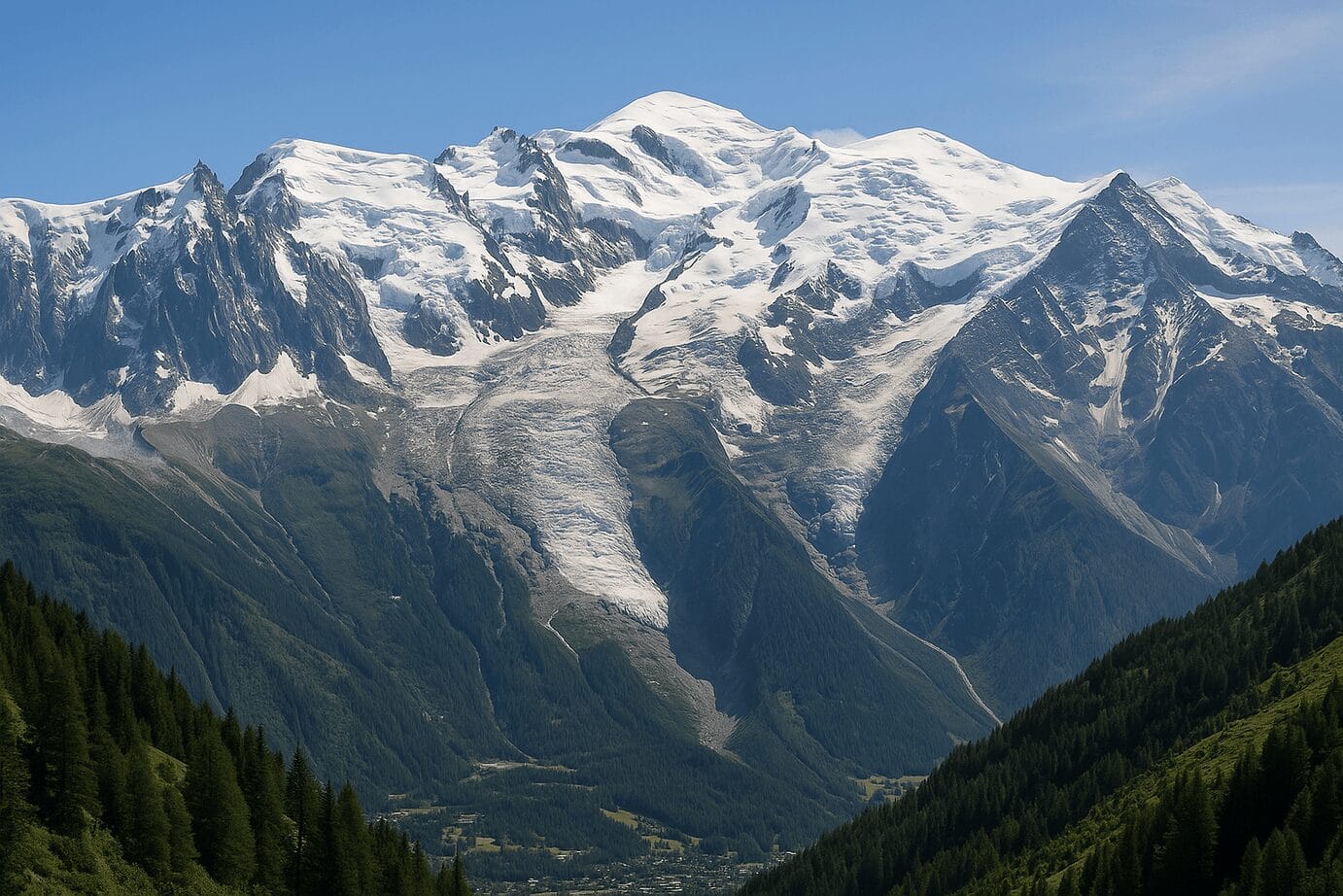
Standing at 4,808 meters above sea level, Mont Blanc France dominates the skyline between France, Italy, and Switzerland, casting its shadow over the charming town of Chamonix and inspiring awe in everyone who glimpses its snow-covered summit. This magnificent giant isn’t just the highest peak in Western Europe—it’s a symbol of alpine beauty, human ambition, and the raw power of nature that claims lives every single year.
The allure of Mont Blanc France is undeniable. Each summer, thousands of climbers from around the world converge on its slopes, hoping to stand atop what many consider the crown jewel of the Alps. But behind the stunning photographs and triumphant summit stories lies a sobering reality: this mountain is one of the deadliest in the world, with an estimated 100 deaths occurring on its slopes annually.
The Geographic Marvel of Western Europe’s Roof
Mont Blanc France sits within the Mont Blanc massif, a spectacular mountain range that stretches approximately 40 kilometers and contains some of the most dramatic peaks in the entire Alps. The mountain’s name, meaning “White Mountain” in French, perfectly describes its year-round snow-covered appearance that has captivated artists, writers, and adventurers for centuries.
The summit of Mont Blanc France actually straddles the border between France and Italy, though its exact height fluctuates slightly due to the thickness of the ice and snow cap that covers its peak. Recent measurements have shown the summit height varying between 4,808 and 4,810 meters, a testament to the dynamic nature of this alpine giant.
The mountain is part of the Graian Alps and features numerous glaciers flowing down its flanks, including the famous Mer de Glace (Sea of Ice), which is the second-longest glacier in the Alps at approximately 7.5 kilometers long. These glaciers have carved deep valleys and created the spectacular landscape that makes the region one of Europe’s premier tourist destinations.
Chamonix: The Gateway to Alpine Adventure
The town of Chamonix-Mont-Blanc, nestled in the valley at the base of Mont Blanc France, has been the epicenter of alpine mountaineering since the golden age of alpinism in the 19th century. This charming French town, with a population of around 9,000 residents, swells to accommodate hundreds of thousands of visitors each year who come to ski, climb, and marvel at the surrounding peaks.
Chamonix hosted the first Winter Olympics in 1924, cementing its status as a world-class winter sports destination. Today, the town offers everything from luxury hotels and Michelin-starred restaurants to outdoor gear shops and mountain guide offices. The official Chamonix tourism website provides extensive information about accommodation, activities, and mountain conditions.
The Aiguille du Midi cable car, one of the highest in the world, whisks visitors from Chamonix to an altitude of 3,842 meters in just 20 minutes, offering breathtaking views of Mont Blanc France and the surrounding peaks. This engineering marvel allows even non-climbers to experience the high alpine environment and appreciate the scale of the mountain.
The History of Conquest and Tragedy
The first recorded ascent of Mont Blanc France took place on August 8, 1786, when Jacques Balmat and Michel-Gabriel Paccard reached the summit after years of failed attempts by other climbers. Their achievement marked the birth of modern mountaineering and sparked an obsession with alpine climbing that continues to this day.
The ascent was sponsored by Horace-Bénédict de Saussure, a Swiss scientist who offered a reward to the first person to reach the summit. De Saussure himself made the third ascent the following year, conducting scientific experiments at the top that contributed significantly to the understanding of high-altitude environments.
Since that first successful climb, Mont Blanc France has witnessed countless triumphs and tragedies. The mountain has been the site of some of mountaineering’s greatest achievements, including speed records, winter ascents, and solo climbs. But it has also claimed the lives of numerous climbers, from inexperienced tourists to world-class alpinists.
Notable tragedies include the 1892 accident that killed three British climbers and their guides, the 2012 avalanche that killed nine climbers, and countless individual accidents that occur with alarming regularity each climbing season. The Mont Blanc massif has earned its reputation as a mountain that must be respected and never underestimated.
Why Mont Blanc France Is So Deadly
Several factors combine to make Mont Blanc France one of the world’s most dangerous mountains despite its relatively accessible routes. First, the mountain’s popularity means that hundreds of climbers attempt to reach its summit each year, many of whom lack adequate experience or preparation for high-altitude mountaineering.
The weather on Mont Blanc France can change rapidly and dramatically. Clear skies can give way to whiteout conditions in minutes, with temperatures plummeting and winds reaching hurricane force. These sudden weather changes have trapped and killed many climbers who were caught unprepared.
Altitude sickness is another significant risk. The summit sits at nearly 4,810 meters, high enough to cause serious altitude-related illnesses in climbers who ascend too quickly or don’t acclimatize properly. Symptoms can include headaches, nausea, confusion, and in severe cases, life-threatening conditions like high-altitude pulmonary edema or cerebral edema.
Objective hazards like crevasses, rockfall, and avalanches pose constant threats. The glaciers on Mont Blanc France are constantly moving and changing, creating hidden crevasses that can swallow unwary climbers. Warming temperatures due to climate change have made rockfall increasingly common as the permafrost that holds the mountain together begins to thaw.
Overcrowding has become a serious issue on popular routes, particularly the Goûter Route, the most common ascent path. On busy days, bottlenecks can form at technical sections, forcing climbers to wait in exposed positions and increasing the risk of accidents. The infamous “Goûter Couloir” has earned the nickname “Couloir of Death” due to the constant rockfall that funnels through this narrow gully that climbers must cross.
The Main Routes to the Summit
Several routes lead to the summit of Mont Blanc France, each with its own challenges and character. The Goûter Route, accessed from the French side, is the most popular and considered the “normal” route. This path takes climbers past the Tête Rousse Hut and the Goûter Hut before ascending the Bosses Ridge to the summit.
Despite being the easiest technical route, the Goûter Route should not be underestimated. It requires crossing the dangerous Goûter Couloir early in the morning when rockfall risk is lowest, scrambling over exposed ridges, and dealing with altitude and weather challenges. The route typically takes two days, with climbers spending a night at one of the mountain huts to acclimatize before the summit push.
The Three Monts Route offers a more scenic and slightly less crowded alternative, traversing Mont Blanc du Tacul and Mont Maudit before reaching the main summit. This route is more technical and requires greater mountaineering skills, including glacier travel and mixed climbing.
The Italian Normal Route, ascending from Courmayeur via the Gonella Hut, provides yet another approach to Mont Blanc France. This route is longer and more committing than the Goûter Route but avoids the dangerous couloir. It requires excellent physical conditioning and stamina as climbers must cover significant distance at high altitude.
For experienced alpinists, numerous technical routes exist on the various faces of Mont Blanc France, including the spectacular Peuterey Ridge and the challenging Brouillard Pillar. These routes require advanced mountaineering skills and are only attempted by climbers with extensive high-altitude experience.
The Role of Mountain Guides
Given the dangers of climbing Mont Blanc France, hiring a certified mountain guide is strongly recommended, especially for those without extensive alpine experience. The Compagnie des Guides de Chamonix, founded in 1821, is the oldest mountain guiding company in the world and maintains the highest standards of professionalism and safety.
Professional guides on Mont Blanc France do much more than simply lead climbers up the mountain. They assess weather conditions, monitor their clients for signs of altitude sickness, make crucial decisions about when to turn back, and navigate the technical challenges of glacier travel and steep terrain. Their experience and local knowledge can mean the difference between a successful summit and a tragedy.
The cost of hiring a guide for Mont Blanc France varies depending on the route, group size, and season, but typically ranges from €800 to €1,500 per person. While this may seem expensive, it’s a worthwhile investment considering the risks involved. The Chamonix Guides offer various programs for different skill levels.
Climate Change and Its Impact
Climate change is dramatically affecting Mont Blanc France and the entire Alpine region. Rising temperatures are causing glaciers to retreat at an alarming rate, altering routes and increasing the danger of rockfall and avalanches. The Mer de Glace has lost more than 120 meters of ice thickness since 1850, and the rate of loss is accelerating.
Permafrost that has held the mountain together for thousands of years is now thawing, causing increased rockfall and making previously stable routes more dangerous. Some classic climbing routes on Mont Blanc France have become essentially unclimbable during certain parts of the year due to these changes.
The climbing season is also changing. Traditionally, the best months for attempting Mont Blanc France were July and August, but warming temperatures now mean that June and September are increasingly preferred to avoid the worst effects of melting ice and rockfall. Some experts predict that the mountain may become too dangerous to climb during summer months within the next few decades.
Scientific research stations around Mont Blanc France are monitoring these changes closely, providing valuable data about climate change impacts on high-altitude environments. The ongoing research helps inform climbing route conditions and safety recommendations.
The Tourist Experience Beyond Climbing
Not everyone who visits Mont Blanc France intends to climb it. The region offers spectacular experiences for tourists of all ages and abilities. The aforementioned Aiguille du Midi cable car provides stunning views without requiring any technical skills or physical exertion beyond walking a few steps.
The Mer de Glace can be accessed via the Montenvers Railway, a charming cogwheel train that has been carrying visitors to view the glacier since 1909. At the terminus, visitors can explore ice caves carved into the glacier and visit a museum documenting the history of alpinism in the region.
Numerous hiking trails around Chamonix offer perspectives on Mont Blanc France suitable for all fitness levels. The Tour du Mont Blanc, a long-distance hiking trail that circumnavigates the entire massif, passes through France, Italy, and Switzerland over approximately 170 kilometers. This classic trek can be completed in 7-11 days and showcases the diverse landscapes and cultures of the Alps.
In winter, the region transforms into one of Europe’s premier ski destinations. The Chamonix valley offers numerous ski areas with terrain ranging from gentle nursery slopes to some of the most extreme off-piste skiing in the world. The Vallée Blanche, a spectacular off-piste descent from the Aiguille du Midi, takes skiers through a frozen wonderland with unparalleled views of Mont Blanc France.
Preparing to Climb: What You Need to Know
Anyone considering attempting to climb Mont Blanc France must understand that this is a serious mountaineering undertaking that requires proper preparation, training, and equipment. Physical fitness is paramount—climbers should be capable of hiking for 8-12 hours carrying a heavy pack at altitude.
Technical skills required include glacier travel with crampons, ice axe arrest techniques, rope work, and navigation in poor visibility. Many aspiring climbers spend months or years developing these skills on smaller peaks before attempting Mont Blanc France. Training courses are available in Chamonix and other alpine centers.
Essential equipment includes mountaineering boots, crampons, ice axe, harness, helmet, appropriate clothing layers for extreme cold, headlamp, and navigation tools. The total cost of purchasing proper equipment can exceed €2,000, though rental options are available in Chamonix for those not ready to invest in their own gear.
Acclimatization is crucial for success on Mont Blanc France. Climbers should spend at least a few days at altitude before attempting the summit, ideally climbing smaller peaks in the area to help their bodies adjust to the reduced oxygen levels. Rushing straight to the summit from sea level dramatically increases the risk of altitude sickness.
The Bureaucratic Side of Climbing
Unlike some of the world’s highest peaks, Mont Blanc France does not require a permit or climbing fee. However, this accessibility contributes to overcrowding issues during peak season. There have been discussions about implementing a permit system or climbing quotas, but as of now, anyone can attempt the mountain.
Climbers must make reservations at mountain huts well in advance during the summer season, as these facilities often book up months ahead. The Goûter Hut can accommodate about 120 people and serves as the primary staging point for summit attempts via the normal route. Competition for beds is fierce during July and August.
Rescue services in the Mont Blanc France region are world-class, with helicopter rescue teams standing by during the climbing season. However, rescue operations can cost thousands of euros, and climbers are responsible for these costs unless they have appropriate insurance coverage. The PGHM Chamonix (Peloton de Gendarmerie de Haute Montagne) conducts hundreds of rescues each year.
The Cultural Significance
Beyond its physical presence, Mont Blanc France holds deep cultural significance in European history and imagination. Romantic poets and writers like Percy Shelley and John Ruskin were inspired by the mountain, incorporating it into works that shaped European cultural consciousness. Mary Shelley’s “Frankenstein” features dramatic scenes set in the shadow of Mont Blanc France.
Artists including J.M.W. Turner and Albert Bierstadt painted the mountain, helping to popularize alpine tourism in the 19th century. Their works captured both the sublime beauty and terrifying power of the peak, contributing to the romantic idealization of mountains that continues today.
In French culture, Mont Blanc France represents natural grandeur and national pride. The mountain appears on everything from postage stamps to advertising campaigns, serving as a symbol of French alpine heritage. The luxury pen company Montblanc adopted the mountain’s name and uses a stylized peak as its logo, though the company is actually German.
Economic Impact on the Region
The presence of Mont Blanc France generates enormous economic activity for the Haute-Savoie region of France and neighboring areas in Italy and Switzerland. Chamonix alone sees over 5 million visitor days annually, with tourists spending money on accommodation, dining, equipment, guide services, and recreational activities.
The winter ski season and summer climbing and hiking seasons provide year-round employment for thousands of people in the region. Mountain guides, ski instructors, hotel staff, restaurant workers, and shop employees all depend on the steady stream of visitors drawn by Mont Blanc France and the surrounding peaks.
However, this tourism comes with costs. The environmental impact of millions of visitors is significant, with concerns about waste management, air quality from vehicle traffic, and the physical wear on trails and climbing routes. Local authorities constantly balance economic benefits against environmental protection.
Looking to the Future
The future of Mont Blanc France is uncertain in many ways. Climate change will continue to alter the mountain, potentially making it more dangerous or even eventually unclimbable via traditional routes. Mountain authorities are considering various measures to manage overcrowding and improve safety, including possible permit systems or mandatory guide requirements for certain routes.
Technology is playing an increasing role in mountain safety, with improved weather forecasting, satellite communication devices, and rescue equipment helping to save lives. However, technology cannot eliminate the fundamental risks of high-altitude mountaineering, and Mont Blanc France will remain a serious undertaking regardless of technological advances.
Conservation efforts are working to protect the natural environment of the Mont Blanc France massif. The mountain and surrounding areas are protected as part of various nature reserves and conservation zones, though enforcement of environmental regulations remains challenging given the volume of visitors.
Conclusion: Respect the Mountain
Mont Blanc France stands as both an inspiration and a warning to anyone who dreams of high places. Its beauty is undeniable, its challenge irresistible to many, but its dangers are very real. Every year, climbers stand on its summit and experience one of the great thrills of alpine mountaineering. But every year, others pay the ultimate price for underestimating this magnificent mountain.
For those who choose to attempt Mont Blanc France, proper preparation, respect for the mountain’s power, and honest assessment of one’s abilities are essential. With the right approach, climbing this iconic peak can be a life-changing achievement. Without adequate respect and preparation, it can be a fatal mistake.
Whether viewed from the valley floor in Chamonix, photographed from the Aiguille du Midi, or climbed with determination and care, Mont Blanc France remains one of Earth’s most magnificent natural wonders—a mountain that has captured human imagination for centuries and will continue to do so for generations to come, standing as Europe’s crown jewel and a testament to the raw beauty and power of the alpine world.
More from The Daily Mesh:
- How 3D Printing Technology Is Disrupting Manufacturing Faster Than Anyone Expected
- 2025’s Most Shocking Moments: The Significant Events 2025 That Changed Everything
- 15 Everyday Heroes Stories That Will Restore Your Faith in Humanity (You Won’t Believe #7!)