


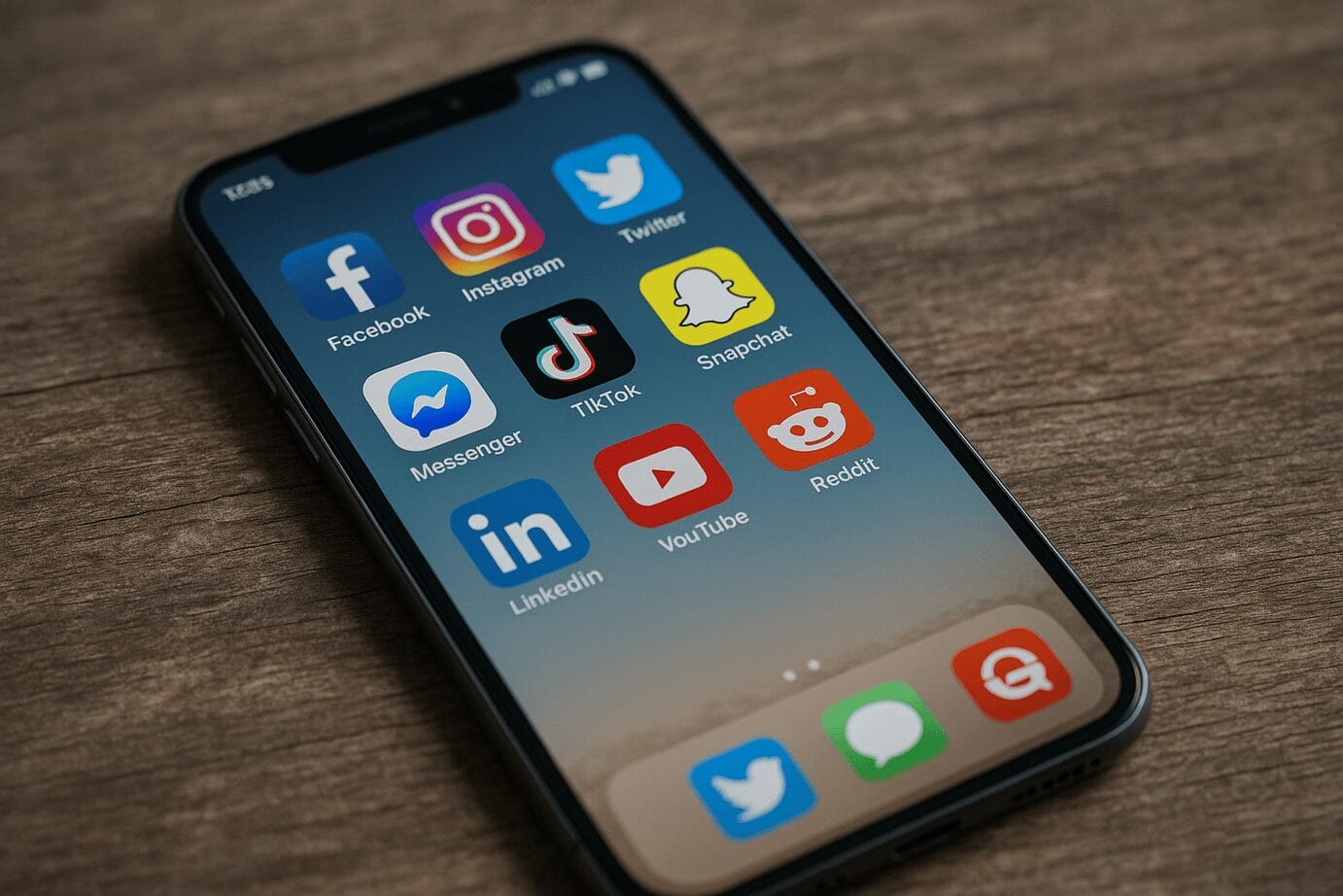
Every morning, millions of people wake up and reach for their phones before they even speak to their loved ones. They check their notifications, scroll through feeds, and carefully consider what version of themselves they’ll present to the world today. This ritual has become so ingrained in modern life that we rarely stop to question what it’s doing to us. The truth is, our social media identity has become inseparable from who we are, and the implications are more profound than most people realize.
The relationship between our online personas and our real selves has evolved into something far more complex than simply sharing photos or status updates. We’re living in an era where the boundaries between digital and physical existence have blurred to the point of being nearly indistinguishable. Our social media identity isn’t just a reflection of who we are anymore. For many, it has become the primary way they understand and express themselves.
The Psychology Behind Our Digital Personas
Understanding how social media identity affects us requires diving into the psychological mechanisms at play. When we create profiles, post content, and interact with others online, we’re engaging in a sophisticated form of self-presentation that humans have practiced for millennia. The difference now is the scale, permanence, and immediacy of these interactions.
Research in social media psychology reveals that we curate our online presence with meticulous care, often more than we realize. Every photo we post, every comment we make, and every reaction we give contributes to the narrative we’re constructing about ourselves. This process of digital identity formation happens both consciously and unconsciously, creating a version of ourselves that may diverge significantly from our offline reality.
The feedback loop created by likes, comments, and shares triggers the release of dopamine in our brains, the same neurotransmitter associated with reward and pleasure. This biological response reinforces certain behaviors and encourages us to continue seeking validation through our online self-presentation. Over time, this can fundamentally alter how we view ourselves and what we consider important in our lives.
Psychologists have identified a phenomenon where individuals begin to internalize their curated social media identity as their actual self. When we consistently present ourselves in a certain way online, we start to believe that’s who we truly are. This isn’t necessarily negative, but it does raise important questions about authenticity and self-knowledge in the digital age.
The Double-Edged Sword of Digital Identity Formation
The process of digital identity formation offers both opportunities and risks. On one hand, social media platforms provide spaces where people can explore different aspects of their personality, connect with like-minded communities, and express themselves in ways that might not be possible in their immediate physical environment. For marginalized individuals, this can be particularly empowering.
Young people discovering their sexual orientation or gender identity often find invaluable support and acceptance online before they’re ready to come out in their offline lives. Artists and creators can build audiences and find validation for work that might never gain traction in traditional venues. People with rare medical conditions or unusual experiences can connect with others who truly understand what they’re going through.
However, the darker side of social media identity reveals itself in the pressure to maintain a perfect facade. The carefully curated feeds we see from others create unrealistic standards that can lead to anxiety, depression, and a pervasive sense of inadequacy. We compare our behind-the-scenes reality to everyone else’s highlight reel, and we inevitably come up short.
The phenomenon of “Instagram vs. Reality” posts has emerged as a response to this pressure, with people revealing the gap between their polished online images and the messy truth of their actual lives. While these posts aim to promote authenticity, they often become just another form of performance, a meta-commentary that itself becomes part of the curated narrative.
How Social Media Reshapes Self-Perception
The impact of social media on self-perception extends far beyond surface-level vanity. Studies have shown that the time we spend crafting our online personas can actually change how we see ourselves in fundamental ways. When we filter our photos, carefully word our thoughts, and present only the most flattering angles of our lives, we create a version of ourselves that becomes aspirational rather than descriptive.
This gap between our social media identity and our lived experience can create what psychologists call “cognitive dissonance,” the mental discomfort that occurs when our beliefs and behaviors don’t align. Some people respond by trying to make their real lives match their online presentation, which can lead to financial strain, relationship problems, and chronic stress. Others experience a kind of identity crisis, unsure of which version of themselves is “real.”
The concept of the authentic self online has become increasingly complicated. Philosophers and social scientists debate whether authenticity is even possible in digital spaces where every interaction is mediated by technology and shaped by invisible algorithms. Some argue that our online personas are just as “real” as our offline selves, merely different contexts that bring out different aspects of our personality.
The Generational Divide in Social Media Identity
The relationship between age and social media identity reveals fascinating patterns. Those who grew up with social media, often called digital natives, approach their online presence differently than those who adopted these platforms as adults. For Generation Z, the distinction between online and offline identity is almost meaningless. They’ve never known a world without social media, and their sense of self has developed alongside these platforms.
Millennials, who witnessed the rise of social media during their formative years, often struggle with the transition between their pre-digital and digital identities. They remember a time before their every thought could be broadcast to hundreds of people, but they’ve also spent their entire adult lives navigating social media platforms. This gives them a unique perspective on the changes these technologies have wrought.
Older generations, meanwhile, often approach social media with more skepticism and distance. Their identities were largely formed before the digital age, and many maintain clearer boundaries between their online and offline selves. However, even they are not immune to the effects of social media psychology, as evidenced by the increasing time older adults spend on platforms like Facebook.
The Role of Algorithms in Shaping Who We Become
One of the most insidious aspects of social media identity is how much of it is shaped by forces outside our control. Algorithms determine what content we see, who sees our posts, and even how our feeds are organized. These invisible systems are constantly learning from our behavior, creating feedback loops that can trap us in increasingly narrow versions of ourselves.
When algorithms show us content that aligns with our existing interests and beliefs, they reinforce certain aspects of our identity while marginalizing others. Someone who engages with fitness content will see more fitness content, which may lead them to identify more strongly as a fitness enthusiast. This isn’t inherently problematic, but it can limit our exposure to new ideas and experiences that might otherwise contribute to our growth and development.
The algorithmic curation of our digital identity formation extends to how others perceive us as well. When we’re shown someone’s profile or content, we’re seeing a version of them that has been filtered through multiple layers of algorithmic decision-making. The posts that gained the most engagement, the photos deemed most relevant by the platform, the information the algorithm thinks we want to see—all of this shapes our understanding of who that person is.
Professional Identity and Personal Branding
The rise of personal branding has transformed how many people approach their social media identity. What was once a space for casual social interaction has become a crucial tool for career development and professional networking. LinkedIn obviously serves this purpose explicitly, but platforms like Twitter, Instagram, and even TikTok have become venues for professional self-presentation.
This shift has created new pressures and complications. Many people maintain separate professional and personal accounts, trying to compartmentalize different aspects of their identity. Others embrace a more integrated approach, believing that authenticity requires showing their whole selves regardless of context. Neither approach is without challenges.
The authentic self online becomes particularly fraught in professional contexts. How much personality is too much? When does sharing personal struggles become oversharing that could harm your career? These questions don’t have universal answers, and the navigation of these boundaries has become a crucial skill in the modern workplace.
Influencers and content creators face these issues most acutely. Their social media identity is their product, their livelihood dependent on maintaining engagement and growing their audience. This can create a trap where the person becomes subsumed by the persona, unable to separate their authentic self from their performance of self.
The Impact on Relationships and Social Connections
Our social media identity doesn’t just affect how we see ourselves; it fundamentally changes how we relate to others. The nature of friendship has evolved in the digital age, with people maintaining hundreds or thousands of connections that would have been impossible in previous eras. But are these connections meaningful, or have we traded depth for breadth?
Research on social media psychology shows mixed results. Some studies indicate that online connections can supplement and enhance offline relationships, providing additional touchpoints and ways to stay connected. Others suggest that time spent on social media actually reduces the quality of our in-person interactions and leaves us feeling more isolated despite being more “connected” than ever.
The performative aspect of online self-presentation can also strain relationships. When we’re constantly crafting our image for public consumption, it becomes harder to be vulnerable and authentic with the people closest to us. The fear that our true selves won’t measure up to our online personas can create distance even in intimate relationships.
Dating and romance have been particularly transformed by social media identity. The process of getting to know someone now often begins with scrolling through their profiles, trying to piece together who they are from carefully curated snapshots of their life. This can create expectations and assumptions that may or may not align with reality, leading to disappointment or confusion when online and offline personas don’t match.
The Dark Side: Addiction, Anxiety, and Identity Crisis
While social media offers numerous benefits, we cannot ignore its serious psychological risks. Social media addiction is now recognized as a genuine problem, with many people exhibiting compulsive behaviors around checking their phones, posting content, and seeking validation through engagement. This addiction is intimately tied to our social media identity—we become dependent on the feedback and validation that reinforce our sense of self.
The pressure to maintain our online personas can contribute to anxiety and depression, particularly among young people. When your identity is constantly on display and subject to public judgment, the stakes of every post feel impossibly high. One poorly received photo or controversial comment can feel like a referendum on your entire worth as a person.
Identity crisis in the digital age takes on unique characteristics. Traditional identity crises involved questioning who you are and what you want from life. Digital identity crises involve the additional layer of reconciling multiple versions of yourself—the person you are offline, the person you present online, and the person you wish you could be. Navigating these different selves can be exhausting and disorienting.
Cyberbullying and online harassment represent extreme examples of how social media identity can be weaponized. When someone’s digital presence is attacked, it can feel like an assault on their very self. The permanence of online content means that mistakes and embarrassing moments can haunt people indefinitely, making it difficult to move past phases or evolve beyond past versions of yourself.
Cultural and Social Implications
The transformation of identity in the social media age has broader cultural implications that extend beyond individual psychology. We’re witnessing the emergence of new social norms around privacy, self-expression, and what constitutes appropriate behavior. The concept of “oversharing” has evolved dramatically—what would have been considered deeply private information a generation ago is now routinely broadcast to hundreds or thousands of people.
Social movements and political activism have been fundamentally altered by social media platforms. The ability to rapidly organize and spread information has enabled protests and movements that might not have been possible otherwise. However, this also means that our political identities are now part of our public social media identity, subject to the same performative pressures as other aspects of our online presence.
The question of digital legacy has become increasingly important. What happens to our social media identity after we die? These profiles, carefully constructed over years or decades, outlive us, creating a kind of digital ghost that continues to exist long after we’re gone. Some people find comfort in this permanence; others find it unsettling.
Finding Balance in the Digital Age
Given the profound impact of social media on identity formation, how can we navigate these platforms in healthier ways? The first step is developing awareness of the gap between our online self-presentation and our actual lives. Recognizing that everyone is curating their content can help reduce the tendency to compare ourselves unfavorably to others.
Setting boundaries around social media use is crucial. This might mean limiting screen time, taking regular breaks from platforms, or being more intentional about what we post and why. The goal isn’t to abandon social media entirely—for many people, that’s neither practical nor desirable—but rather to develop a more conscious and deliberate relationship with these technologies.
Cultivating the authentic self online doesn’t mean sharing every thought and feeling, but rather being honest about the fact that we’re all presenting curated versions of ourselves. It means being willing to show vulnerability and imperfection, recognizing that real connection requires more than a perfectly filtered image.
Mental health professionals increasingly recommend regular “digital detoxes” where people disconnect from social media for extended periods. These breaks can help reset our relationship with these platforms and remind us that our worth isn’t determined by likes, follows, or online engagement.
The Future of Digital Identity
As technology continues to evolve, so too will the nature of social media identity. Virtual reality and augmented reality promise to blur the lines between physical and digital existence even further. We may soon inhabit digital spaces with avatars that look nothing like our physical bodies, raising new questions about identity, authenticity, and self-expression.
The rise of artificial intelligence and deepfakes adds another layer of complexity. If our images and voices can be convincingly replicated without our consent, what does that mean for our control over our digital identity formation? These technologies challenge our fundamental assumptions about identity and what it means to “be” someone.
Younger generations are already developing new norms and expectations around social media identity. The ephemerality of Snapchat stories and the raw, unfiltered aesthetic popular on BeReal suggest a potential shift away from the highly curated perfection that has dominated platforms like Instagram. Whether this represents a genuine change or merely a different form of performance remains to be seen.
Conclusion: Reclaiming Our Identity
The reality is that social media identity has become an inextricable part of modern life. We can’t simply opt out without significant social and professional consequences. But we can become more conscious and intentional about how we engage with these platforms and how we allow them to shape our sense of self.
Understanding the psychological mechanisms behind our online behavior gives us power over them. Recognizing that the validation we seek through social media is often empty and fleeting can help us find more meaningful sources of self-worth. Being honest about the gap between our curated personas and our messy reality can free us from the exhausting work of maintaining a perfect facade.
The question isn’t whether social media will continue to influence our identities—it undoubtedly will. The question is whether we’ll be passive recipients of that influence or active participants in shaping how these technologies affect us. By approaching our online presence with greater awareness, setting healthy boundaries, and remembering that our worth isn’t determined by our engagement metrics, we can develop a social media identity that enhances rather than diminishes our lives.
The shocking truth about social media identity isn’t that it’s changing who we are—it’s that we have more control over that change than we think. We just have to be willing to exercise it.
More from The Daily Mesh:
- How to Reconnect with Old Friends — The Simple Trick That Works!
- How to Support Wildlife Conservation and Why It Starts at Home
- The Shocking Truth About Foldable Device Value: Are They Really Worth It?